
How To Stick To Your Training Plan And Get Your Runs In
 Steve Carmichael·Last updated
As runners, it can be hard to stick to your training plan. Life, kids, work, motivation. For sure, staying committed to running on days you just don't feel like running can be difficult.
In this article, I share practical tips to help you stick to your training plan, including some tried-and-true strategies I've used myself to pull myself out of a running funk or get out the door running. It isn't always easy, but consistency with training is one of the most important training tips I can offer.
Sarah, one of our RunBuzz community members, found herself in this exact situation. Frustrated, she emailed me about her (common) conundrum …
How do you continuously stay motivated and get out of a funk when you get into a funk?
I’ll go through spurts and just quit running altogether. It is usually before I have signed up for a race. I was signed up for my first half marathon in March and just up and quit running three to four weeks before the race. I finished the race at 2:59 but was miserable. I signed up for the 15k Boilermaker that was last weekend and backed out because I was not prepared as I had quit running for months. I signed up for my next half marathon on 10/19/14 and just started a training plan this week. So far so good…but I am only three days into the training. What are your suggestions?
The first thing you should know about falling into a running funk or falling off the bandwagon is that this is one of the most common struggles I see as a running coach. It is completely normal, however, it should be temporary. When it becomes frequent, we have problems.
Let's dig into this more.
Analyze Your Life Habits
The first step in figuring out why we lose motivation to run or exercise is to do a little self-analysis.
If we take an honest look at ourselves and look for things that help contribute to the situation, we can often find actionable steps that we can take to get our training consistency back.
Here is one of my latest podcast episodes digging into this in a lot more detail with a great friend and guest speaker, Irene Bosco, who is a running coach and licensed counselor:
Being motivated all the time is impossible
It is impossible to feel motivated 100% of the time. Motivation comes and goes.
Some days it will feel like a grind to get out the door. On other days you'll bounce right out the door! When you lose your desire to run, you need to be aware that this is a normal feeling. It's part of being human.
But when your lack of motivation turns into days, weeks, or months? Then we have a situation that is much more chronic than motivation itself.
Move towards positive momentum
Ultimately what we're trying to get to is positive momentum so we can make progress. Momentum leads to more momentum, and once you see positive progress with your running, it's much easier to keep that momentum established.
When we stop seeing results, or results are slower than our expectations, we often lose motivation.
Dig into the details of your daily routine.
- What is your daily stress level?
Stress can be incredibly tiring and over time stress hormones can physically and mentally wear you down. - Are you going to bed at a decent hour? How's your sleep?
Most of us get way too little sleep and many of us have undiagnosed sleep issues. - Are you eating well and keeping your blood sugar stable?
Try switching to smaller, more frequent meals, drinking more water, and eating breakfast.
Get a blood test and look for nutrient deficiencies. For example, you could have vitamin D deficiency. Look for more variety in your foods and take multivitamins. Note: Don’t take any specific supplements unless directed by a nutritionist or physician
- Are you stressing your liver with too much alcohol or processed foods?
The more health-conscious I have become, the more I've learned about how processed food is creating a malnutrition problem in our country and worldwide.
Our bodies are starving and craving nutrient-rich food. Processed foods in combination with GMOs are leaching out all the nutrients in our food and introducing toxins into our diet. Is it possible that poor food quality is affecting your health? Poor nutrition leads to a lack of mental clarity, focus, and energy. - Are you dieting or not eating enough calories?
Dieting or being too restrictive with your calories can really mess with your mood. If you cut out too much, the lack of calories can impact your energy levels. - Could it be early signs of depression or seasonal mood disorder?
This is something that only a physician can diagnose, but most adults go through some sort of depression phase at least once if not more than once in their lifetime. For some, it can be very frequent.
Key Takeaway: Any of the things mentioned above can make us feel fatigued, and worn out. They can leave us with no fight left to get out the door and run.
Most of us focus so much on the training aspects that we don't realize that the other factors are sneaking in and robbing us of our ability to have our heads and body in the game.
Remember, to have true wellness, we have to keep our physical, emotional, mental, and spiritual life nourished and balanced.
Addressing as many of these things, as possible will make a huge difference not just in our running but in our quality of life.
Forgive Yourself

Dealing with the issues at hand, first, if you find yourself in a funk, forgive yourself.
Falling into a rut can lead us to be overly hard on ourselves. Blaming ourselves gives us redemption for whatever guilt or let-down we feel that goes along with it.
For example, if you drop out of a race you know whatever the reason is we often feel let down, and if we do it enough we become adapted to that feeling of let-down, and every subsequent time we do something like that it becomes easier.
But if you find yourself being particularly hard on yourself just realize that you're only human, and this is 100% normal. Today is not just another day it's a new start. Past is the past, and if you’re going through this right now, I encourage you to pledge a new start and start down a new path today not tomorrow but right now.
If it’s night, start by just setting out your running clothes, and let's get you back on track.
But what if you just had a bad day? What if you're not totally in a workout funk? Well, that's okay. Just realize that tomorrow is a new day, so we can't dwell on it. We simply just start over. We do the best we can with what we're given.
Deal With the Root Cause
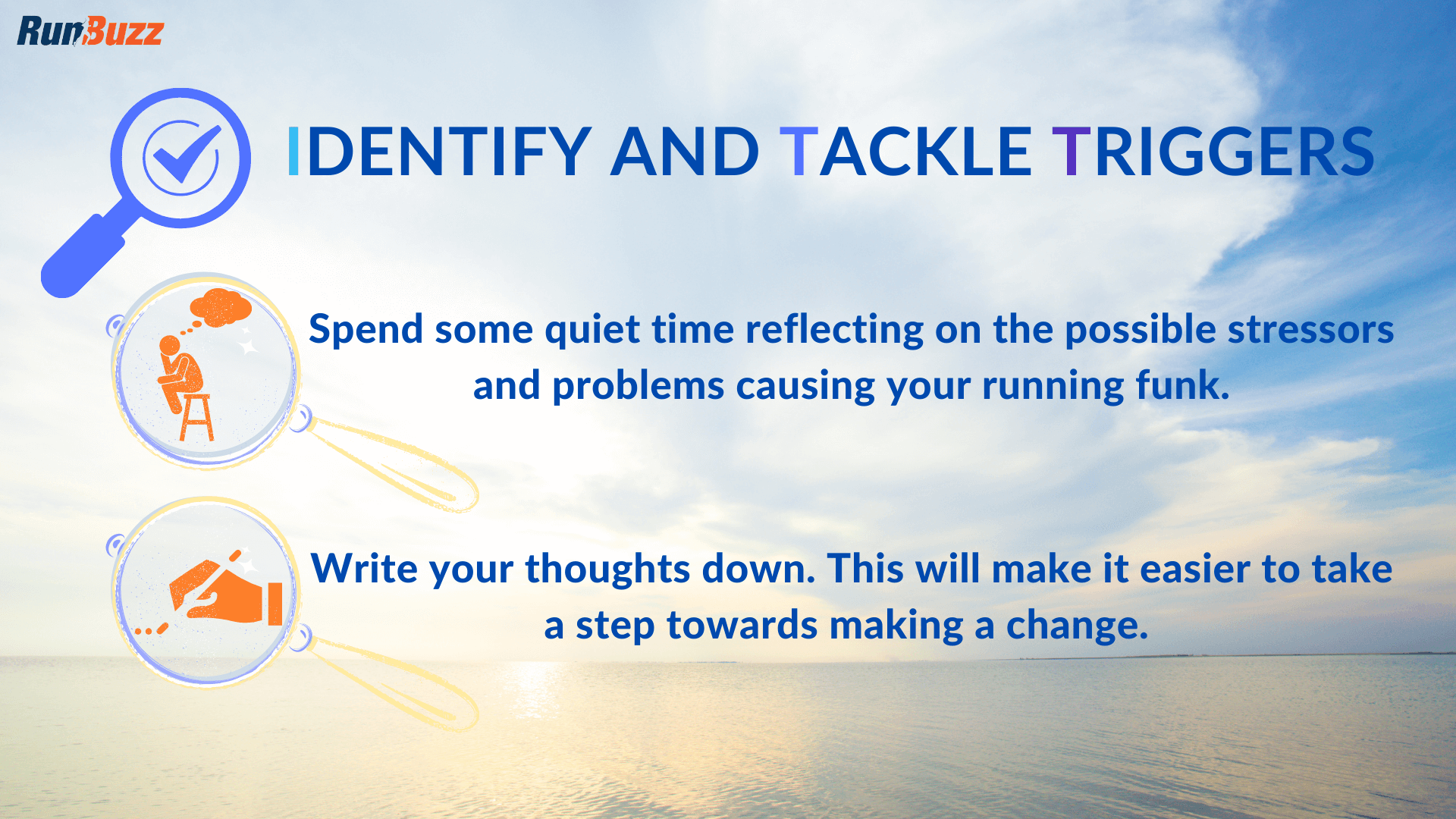
Another thing is to deal with the root cause.
Spend some quiet time looking back at the times you quit. Be honest with yourself and see if you can see a trend or maybe a trigger.
For some people, it might be a lack of time, and I think lack of time is a symptom.
To be honest, I use that one on occasion, and I catch myself sometimes using it even though I know that it's more of a symptom.
Even with all that I have going on I am pretty much convinced that for me it's an excuse, I could have found time, but I just chose to do something else.
I needed to decide what was more, important to me and realize that not everything gets done. The garage will have to stay messy, or grocery shopping will have to wait until after my run.
Identify Trigger Behaviors and Take Action
It's one thing to recognize the root cause and what is contributing to missing workouts, but it is much more difficult actually to do anything about it.
When I've fallen into a pattern of skipping workouts, I was in a funk. I knew deep down what the issue was, I simply did not have the energy or the willingness to do anything about it.
When I get stressed, tired, busy, and whatnot, I start leaning on comfort foods to deal with it.
And all these behaviors just lead to this ongoing cycle of eating and feeling guilty. I knew it was wrong and guilt is a natural reaction, but then I get over the disappointment of eating junk food and repeat this vicious cycle over and over again.
When I honestly looked at what was causing my funk I realized that I needed to deal with the stress and fatigue so that I can control my eating habits.
In your case, it may be running, but in my case, it was more about diet. And looking back, it was a lack of sleep and poor eating that led me to feel so crappy that I just wouldn't feel like running.
So I knew what the triggers were, but it took me a long time to figure out what to do about my triggers and break the cycle.
Knowing your triggers helps you identify when you're at the most risk of falling back into that pattern of negative behavior, so you can start to make a shift in direction before you get there.
Almost a month ago, I caught myself falling off my healthy eating bandwagon again. I found myself extremely busy at work and turning to soda and unhealthy food as a way of dealing with the stress and lack of time to grab a real lunch. But this time I saw the cycle reforming.
As a result, I was able to turn it around much faster.
Identify your triggers and be hyper-aware during those times.
Learn to Overcome Your Fear and Self-Consciousness
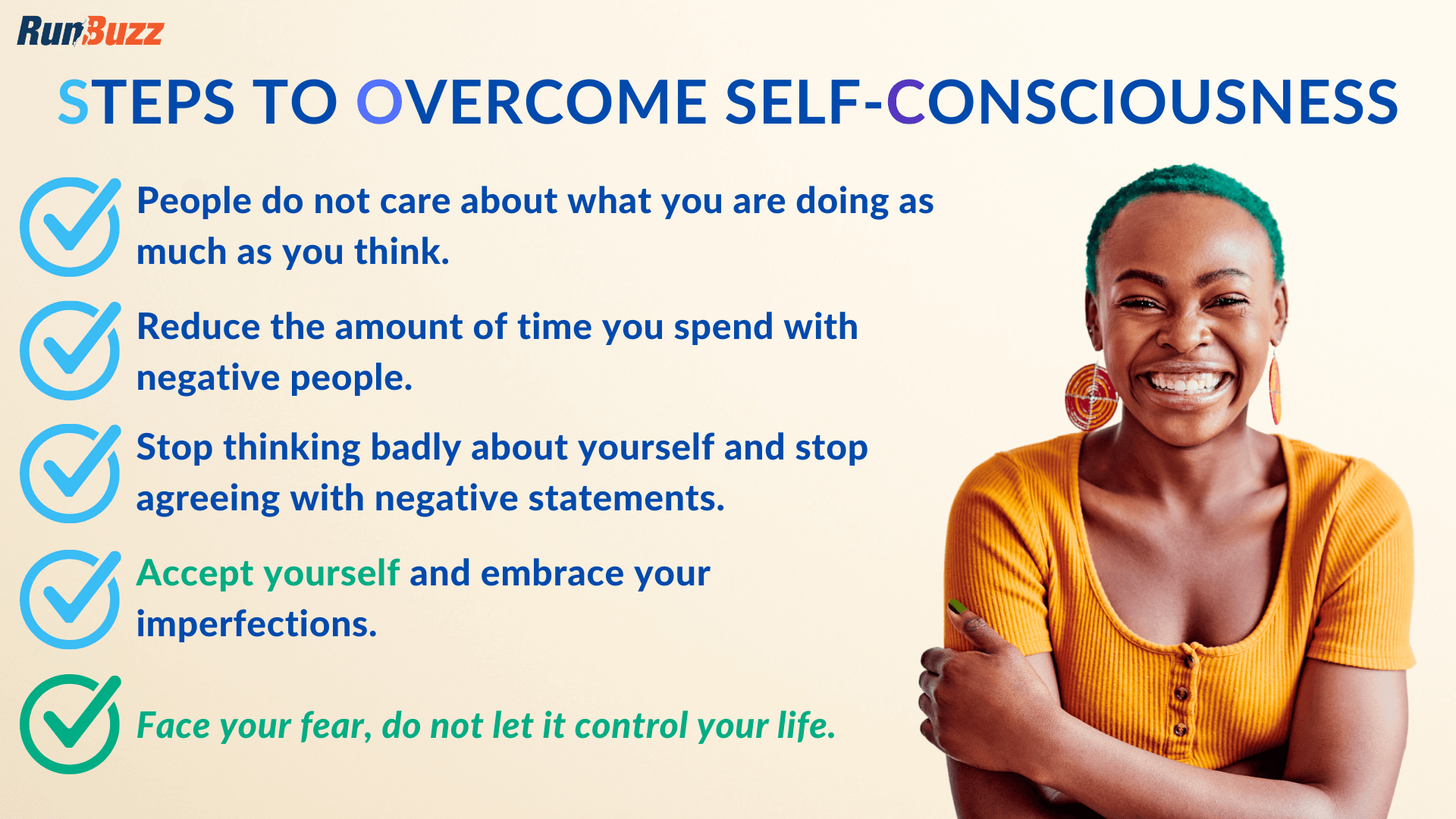
For some runners feeling fear and self-consciousness is a root cause that can lead to giving up working out and ultimately leading to quitting running altogether.
If you’re struggling with self-consciousness or fear or worrying about how you look or what others may think of you when they see you, then check out the following podcast episode on how to overcome the feeling of being self-conscious about your running.
Analyze Your Training Schedule

Let's switch gears a little bit; let's focus on the training aspects of health.
So my tip here is to analyze your training and your approach to running.
Are you doing too much? Some people get involved in running for the first time and then go all in all at once. They try to do too much, too soon.
The first thing to check is your exercise routine expectations. Are they realistic? If not, fix that first. Most runners need an average of 3-5 days, depending on their goals. You DO NOT NEED to run 6-7 days per week. I have trained people to qualify for the Boston marathon with just a four-day training cycle plus strength training.
Looking back at times, I went into health and fitness and weight training in particular so headstrong and at such a breakneck speed that it just wasn't sustainable. I burnt myself out. I did too much too soon and I didn't allow enough flexibility with myself to rest, recover, or just be well-rounded in my life. My body or maybe more accurately my mind you know just simply started resisting.
I see people going through a funk or being burned out all the time. Many people work ridiculous hours to get stuff done and delivered, and it's almost expected of us in the corporate world nowadays.
We can't let the client down but after a few weeks you see people start to break down physically and mentally and you see the quality of the work start to suffer. The same thing with running, I see runners all the time especially beginners who just jump in so hard so fast that they simply just burn out.
But if you introduce yourself slowly into the sport, set some realistic goals, this will allow you to balance running with other activities you enjoy as well.
So start slow, easy, and in manageable chunks.
If you're starting back up after a long layoff for not being unable to sustain a running program for very long, start slow, easy, into manageable chunks as well.
Make sure to have other things you enjoy doing outside of running. For instance, I love running but I also like watching college football, being involved with the kid’s activities, and running a business.
- What about if you don't feel like running at the moment?
You can at least try to take a walk, so the more you get out and get the blood flowing, bringing oxygen to your brain cells, the more you can change your mood, and who knows maybe you'll feel like running after you start to feel better.
- Have you been running for a long time and are falling into a funk?
What you can do is simply try taking a few weeks off, just give your body a chance to replenish, and mentally take a break. The biggest resistance that I see that I hear from people is that they feel like it's taking a step back. They don't want to lose what they've gained. If they take days off, weeks off they feel like they're going backward but what really happens is that taking time off drastically helps you get your head back in the game – you don't really reduce your fitness level that much.
After a few days off, you most likely will come back rested healed, and mentally stronger. I try to take a week or 2 off every 6 months or so usually after a marathon or half marathon. In the last several years, I have even taken off the last 2 weeks of the year mainly because of Christmas, and New Year. I also take a couple of weeks off after every marathon and after the half marathon.
Sometimes I will take several days off, and maybe have a fun run with my running club or just do some really easy runs.
5 Ways to Break Out of a Running Funk
Create A Running Blog

Write about running or start a running blog. I became a better runner after I started a blog.
You may be thinking "Yes, seriously, I have no time for that, I'm not a coder".
Well, creating a blog is simple in fact. All you need to put up a website is to go out to a web host like A2 Hosting and literally you can be up and running in 5 minutes, which includes your domain name and your hosting, which is where your files and images and things are stored. Most introductory plans are as little as $5/month depending on the options you choose. (Note: I may receive a small referral commission should you choose to use A2 Hosting at no additional cost to you). I do personally recommend them though.
Setting up a WordPress blog is as simple as signing up for web hosting and going through a one-click install process. You do not even have to be somebody who codes web pages. Almost everyone with a website out there is using pre-designed templates, and doing some basic changes, like adding a logo, some photos and then starting to write articles and content.
What this gives you is an awesome audit trail that puts you out there, forces accountability on you. People will eventually come to your blog and expect out of you new stories, and running tips.
So I created a blog and shared my first journey to my first marathon. Blogging motivated me to keep running and led me to start coaching. I wanted to share what I was learning with others and then it led me to form a running club and podcasting.
I'm not saying you need to do all these things but you might be surprised where it takes you and. My own journey started with a simple running blog and it drew me in so much, I got into run coaching.Seriously, consider starting your own running blog! A2 hosting makes setting up yoru own website so easy!
- Writing has this incredible way to keep me motivated and helps me immerse myself in running and coaching. It forces me to become a student of the sport and I love this.
Surround Yourself With Positive People

Running can be a solo sport but it does not have to be all the time solo. The whole reason for creating the RunBuzz private Facebook community was to surround myself with other runners, people going through the same thing as me.
Yes, I coach, I study running but I am a runner first, and I struggle with the same things all of you do. I need the same type of support system that you do. The running community keeps me involved, keeps me running when I don't necessarily feel like doing it. Also, by joining a running club, you can make friends with people that have similar running goals, and reduce your chances of getting into a funk again. It’s good to surround yourself with people who inspire and motivate you.
Train with Family
Figure out how to make running a family occasion. I often hear that being busy with family is a barrier to getting exercise, but I’m sure there are ways to incorporate family into your training. I knew a lady who took her kids to soccer practice and was running around the field in order to get her miles in.
Getting your family involved not only gets them on board but it leads to a stronger support system. Moreover, your family is going to be healthier because of it, which is a good thing, especially now when we witness a significant rise in childhood obesity.
Try New Routes and Cross-Training Activities

To help you get out of the funk try something new. This can be a new trail, new-cross training routine, or new shoes, new outfit, anything that's going to break up your normal routine.
Sometimes being in the same routine week after week leads to boredom, we simply get tired of doing the same thing all the time and we just lose that excitement, and that is often a very big cause of falling into a funk.
Develop Positive Mindset
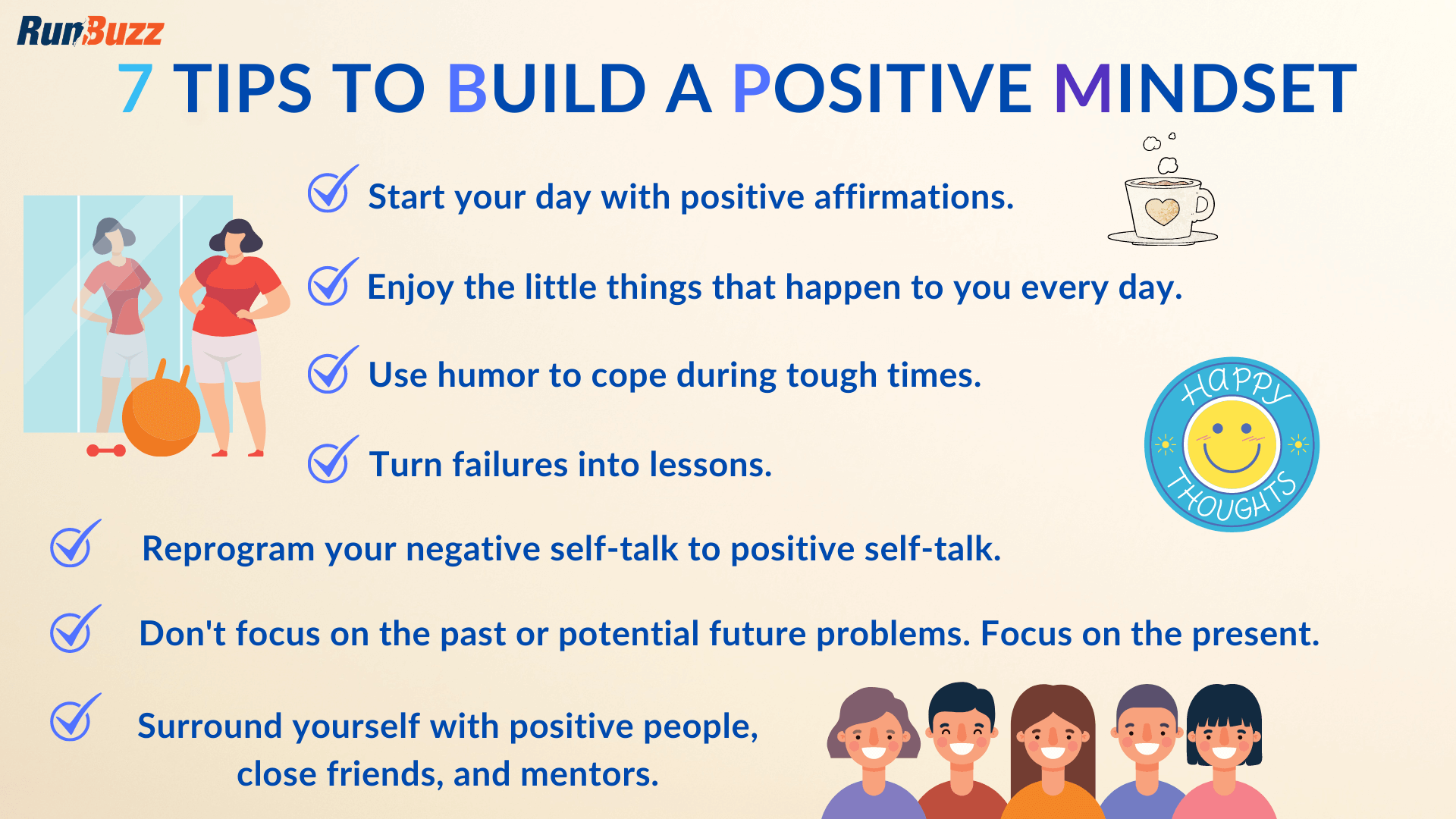
Be a positive person. Create a positive environment and surround yourself with people who have a positive mental attitude.
I used to hate running. When I started running I was so out of shape, It sucked bad. because I was not used to being uncomfortable. How did that period of time influence my thoughts?
It took me time to replace my negative thoughts with positive, and learn to be comfortable in uncomfortable situations. Even for an experienced runner like me, running can be uncomfortable.
Here is an example: I ran 14 miles this weekend for a training run and the last mile was pretty uncomfortable, my thighs were burning, my calves were tight, my feet were hurting, and it was hot and sweaty.
- So my Previous Self would say: “That sucks”.
- But Myself This Weekend didn't have the same negative thoughts. Being uncomfortable is now my way of challenging myself. All my runs are awesome but some runs are still challenging and they should be if you're doing things correctly.
Over a period of several years, I have not only changed how I think but how I live. I pulled myself out of this negative thinking and I continued running by changing my thought process. I found and surrounded myself with positive people. I chose very carefully what I was reading and what I was listening to when it came to books and music. I read running books and I read stories of people who are successful and not all of them were runners, some of them were successful in business.
I'm not the same person anymore. I am less self-centered, I find a lot more joy in helping others.
Bottomline
You have to be honest with yourself. Getting out of a funk is extremely hard and it takes time. Start with an analysis of your lifestyle and training habits. Try to identify the root cause of how you got there and surround yourself with the support of people that motivate and inspire you.
Happy Running!
Not Realizing Time Commitment

So reason number one is that as runners we don't realize, I think, the level of time commitment that's often needed. For example, marathoners and half marathoners fall into this trap a lot. And I'd argue that anyone with two kids and a full-time job working 40 or 50 hours per week and doing sports can still train for a marathon. I've done that a few times and it is a huge time commitment, you know, regardless of whether or not you're running a marathon.
But even those of you who are brand-new to running certainly can do 30 minutes, three times per week. And if you can't commit to that, I would argue that your life is just way out of balance. But for those of you who are running a half or full marathons, there is that high level of commitment that is needed. This commitment is time. Also, the real commitment comes not so much with time, but with just getting our butts out the door to go for a run.
Pushing Yourself Too Hard

For most of us, I'd argue, 99% of us, we start off our running program way too fast, way too aggressive, and we get excited and we push ourselves too hard. Our lungs are burning and we sometimes push ourselves to where we feel nauseous or we get so sore we get shin splints or just get frustrated because the level of suck is so high. We just don't start conservative enough, which often leads to people just not enjoying it and dropping out of running.
The Lack of Commitment

Another reason we often quit is we just simply lack the commitment. Commitment is doing everything necessary to ensure you stay on track, regardless of how motivated you feel. If you struggle with commitment, you may need to create conditions that will help you stay motivated. Again, I'm a big fan of training partners, coaching, and running clubs.
Also, if you're struggling with commitment issues, it may be a sign that you're also biting off more than you can chew. So clearly, if you're extremely busy clear your calendar ahead of time instead of waiting for that day. Move things around if you have to. You can still fit those other things in, but you may have to just spread them out a little bit further apart and look for the little things you can do that you can back up together.
For example, if you have a lot of things going on during every single day of the week, see if you can knock them out and say, leaving two days of the week free.
I run errands on my rest days. I sometimes will pull into a gas station to top off my tank when I drive by one rather than wait until it's getting empty. Because what I found is Murphy's Law always states that when you need to fill up your gas tank, it always falls on the busiest day of the week. Or at least it seems that way to me.
By the way, if your training plan has you running today and off tomorrow and there's just no way you can get a run in today, you know, just switch days, it's OK. You can move things around. Just try to keep alternating between hard and easy pace days. Moving around workouts won't really hurt you, but you may have to change up what you have planned. So you may need to do a hard workout or do an easy workout, depending on what you did before in the overall scope of training or the training season.
Training is like putting pennies in a jar, so every mile is a penny, and every time you work out, you put a penny in the jar. Each penny in and of itself isn't worth much. Just like each run or each mile overtime isn't or by itself isn't worth much. But over time, pennies add up, these miles add up. So, focus on getting those pennies or getting those miles in the jar.
But again, do it smart. If you have to run a few days in a row and you know you're really due for a rest day, but it's the only day of the week left that you can run, go ahead and work out, but just keep it light. You certainly wouldn't want to go off and do a high-intensity tempo run on a day that you should really be taking it easy.
Self-Doubt and Negative Thinking

Another reason we kind of fall off the running is that we often have lots of self-doubt or thoughts that we're too busy. That's normal, but we have to get on with it, we have to move on, and actually, there's a technique. It's called redirection, and that's a great technique for dealing with negative thoughts that may enter your brain. The negative thoughts can be like “I’m bad”, “I’m just not a good runner” or “Well, I think I'll just push off my run until tomorrow”. These are certainly negative thoughts that come and go and pop in our heads all the time.
The key with redirection is basically to just deflect it and move on and try to immediately redirect your attention to something else. You can use this technique even on race day.
So for those of you who run marathons or half marathons or you're in the long run, there's always some level of anxiety. It may be the fear of bonking before a race and hitting a wall. It may be the fear of going out too fast or fading at the end or getting injured or sick right before race day. And these things are certainly possible outcomes that could happen. A lot of these are in your control but a lot of them are outside of our control and there's not a darn thing we can do about it. You can't prevent yourself from getting sick before a race day.
And if it happens, it's not the end of the world. But, you have to put your training in balance. You have to put your life in balance. Sometimes you just have to roll with the punches. You may have to change your goal to a new one for the things that are in your control, those things that you can focus on, and come up with remediation techniques to try to avoid that.
So if you're worried about going out too fast, set your watch and actually pay attention to it. Or if you're somebody that tends to go out too fast and you don't have a GPS watch, it's probably worth some money to go pick one up. So we all have these feelings that pop in these negative thoughts and we need to understand that these negative thoughts lead to negative emotions and negative emotions become toxic. They're going to get in your head and they're going to grow like a weed in your mind, and they're going to strangle any sort of peace of mind that you have. If you allow them to continue to fester, to grow, they're just going to mess with your will to do anything positive for yourself.
Sometimes, I go through these phases where I get into this negative mindset and I really let it drag my mood and my emotions down. And this type of thinking in this type of mood often leads to negative things that feed upon itself. You'll stop running, you’ll lose this desire to run as often. You're going to eat like crap because you're going to be thinking “hey, what's the point?”. Eating healthy, eating clean is hard. You'll start telling yourself that you won't be able to finish marathon training or run that first 5K.
And for some, these thoughts often come into play during that first time, that first run or the first training run that didn't just go as planned. And you start doubting yourself in these thoughts popping into your head.
There's no magic pill that makes these go away. What seemed to work with people I've coached is that not allowing the thoughts to even get passed. I kind of allow them and understand that they're going to pop into my head, but then immediately put up a wall, deflect them and block them out. Again, these thoughts, they build on each other, they can create a snowball effect that when something else goes wrong, it just reinforces the negative thoughts and it just continues to go on and on and on.
These thoughts just really make you question your weaknesses. So, just stay positive, stay with it, and learn that those thoughts are normal and just learn how to redirect them.
Tips to Manage Your Negative Thoughts
Uplifting Music
If you have a hard time deflecting negative thoughts or they keep popping back in, here's a little tip that I found helpful if it can be done safely and you're on a trail.
Use your iPhone or Smartphone or iPod or whatever it is you carry around that plays music. On one hand, these devices can be annoying, but on the other hand, they can be a lifesaver. And so change the song, change something, push buttons, do anything you can to take your mind off the thought, use music, change the tone of the music, find uplifting music.
Conversation with Running Partner
If you're running with somebody, here's another tip. Force a conversation with your training partner. Talking to somebody will make your run fly by. But there are times during runs, especially when you start getting tired and you're having a hard time. A lot of times the conversation will go quiet and you just won't maintain that conversation. You go through periods of time where you're kind of internalizing things.
But if you're running with somebody and one of these negative thoughts pops in your head, you're starting to get tired or you're starting to fade, just start the conversation with the partner or change the topic.
Also, if your partner starts to complain that they're feeling sore, work it out with them ahead of time that you're going to change the subject and change it to something that keeps their mind off of it. You can often turn around your running partner's attitude simply by just changing the conversation and it creates a distraction. So I guess just to wrap it up, a positive mental attitude is a key.
Lack of Proper Training

Another factor that causes people to drop out of running programs is just a lack of proper training. There are so many resources available when it comes to training. But lack of training can lead to injury, frustration, and not progressing to your potential. It can cause you to go too aggressive, too conservatively.
So I recommend getting a coach, finding a mentor, listening to podcasts, reading books, learning different ways, and following proven plans.
Don't forget about nutrition. Try to experiment a bit and find out if low carb, moderate carb, high carb works for you.
I highly suggest a book I recently read, “Diet Cults” by Matt Fitzgerald. The biggest thing I learned from this is to stop believing that anyone’s style of eating is the only way to eat. Different diets, whether it's the Mediterranean diet or paleo or gluten-free diet, they all have their pros and cons. And there is no single way, no single right way to eat. There is only one way that only works for you. Just eat clean, eat healthy, and have a wide variety of foods, find out what does work for you.
And the biggest issue I have with some of these so-called diets is that most insist that they're the only way to eat, and that's just pure crap. Your way or my way or everybody else's way or the latest diet's way is bad, it's just that most are overhyped.
Variety, Balance, and Moderation is the Key
When it comes to training, moderation is the key. Just like moderation is a key to a lot of things, variety is even better. So I'm going to suggest that you don't just be a runner. And I'm the biggest hypocrite when it comes to this last point.
I love to run, but I often do it to the detriment of other things. You know, I used to love to hike the bike to fish. OK, so fishing is not really an exercise, at least not here in the Midwest. But I used to love doing things like lifting weights and so on, and I just don't have time anymore.
And I suggest trying substituting into your routine. Try things like yoga, rollerblading, whatever brings variety to your life.
These are all great things, again, if we do it in moderation. Find things that complement running, try to find things that are a combination of strength, mobility, and flexibility, and then combine that with some form of cardio, whether that's swimming, biking, or running.
One thing I have never tried, but I may try soon if I can get my nerve up to learn how to swim better is a triathlon. I think triathletes are some of the best athletes and they certainly mix it up between the three activities, cycling, swimming, and running. And because of it, I strongly feel that in most cases they're better athletes than runners in general. And, you know, the point of this is that we really need to change things up. We need to change our scenery. We need to hit muscles that we don't normally hit with running.
And, of course, stay focused and persistent and educated and keep learning when it comes to training. And if you do this kind of stuff, you'll stay engaged. You won't get bored with running, you'll stay active and you'll stick with your training long term. Run during all seasons. Don't take winter off, I mean, there's gear that will keep you warm. If you're cold, there's better gear that will keep you warm and you'll certainly warm up within the first half mile to a mile if you get going.
At least go to the gym and do something like take a spinning class, plot some sort of group exercise or even use a treadmill if you have to. And for me, I'd rather poke my eyes out, then run on a treadmill but that's just me. If you enjoy it, do it certainly.
So these are all things that I think could help you stay on track. The variety has been called the spice of life. It really gives us different perspectives and allows us to be more well-rounded.
Show notes:
At the beginning of the episode we discuss a Men's Fitness article, Science-Proven Fitness Motivation, that summarizes a recent research study published in Health Psychology, that having 'instigation habits' can greatly increase your chance of sticking to an exercise routine, like running. For example, one instigation habit I have is Saturday morning running club. Knowing that I have a run with others, greatly increases the chance I will fight the alarm clock and get up early. Another habit is setting my running shoes by the front door as a constant reminder of my need to go for a run. Every time I pass my running shoes, I 'think' about running and whether or not my run is completed for the day or not. If a run is scheduled for that day, it is a nice reminder, "Did you get your run in?"
I also shared the analogy of a bucket with a hole in the bottom. We have periods of time where our 'motivation bucket' is full, but since our motivation bucket is 'leaky', our motivation leaks as well. Sometimes we are full, other times we are empty. When we are empty, we may need additional help to get us out the door.
Final Thoughts and Guidance
Motivation is a tricky thing. Some believe you can control or 'create' motivation, others believe you have little control. For me, I have found that the more 'resistance' we have in our life around the very thing we are trying to accomplish, the more difficult it is to stay motivated. For example, busy schedules, stress, lack of sleep can all be things that cause us to lose motivation. Often, when you identify the blockers and try to remove them, add key instigation triggers, and take practical action to 'set up' activities like the tips mentioned in this podcast episode as well as work on mindset exercises, you will be equipped to handle a lot of the things that prevent you from running. If you have a tip that works for you, I encourage you to share it inside our private Facebook community which you can get by signing up for our Free Runner's Toolkit.
Oh, and that embarrassing T-Rex Dancing video we mentioned with your's truly at the Columbus Marathon….
I hope you enjoyed this episode of the RunBuzz podcast.
Happy Running!
Steve
Related Articles


Related Podcast Episodes
Dive deeper into this topic with these episodes from the RunBuzz Running Podcast.
Episode 154
Building Self-Esteem and Confidence Through Running With Sandra Mikulic
Episode 140
Getting Through Trying Times and How To Maintain Your Running Mindset With Irene Bosco
Episode 114
Ryan Hall - Olympic Athlete And Pro Runner On Mindset and Running Goals
Episode 46