
How To Choose The Right Running Shoe For You
 Steve Carmichael·Last updated
Picking the right running shoe can be confusing. There are so many shoe brands and models available that it is hard to know where to start. Do you pick the latest trendy shoe, or go with a traditional brand? Do you need a treadmill test, or can you just grab a pair off the shelf at your local running store?
Ultimately, what you are looking for is a pair of shoes that feels great on your feet. I have been saying that in this guide for years, and the research has caught up with it. Comfort is not the soft answer. It is the best predictor we have.
Want the shortlist instead of the whole explanation? The RunBuzz Running Shoe Finder asks a few questions about how and where you run and narrows 33 shoes from Brooks, ASICS, HOKA, Saucony, New Balance, Nike, Altra, Mizuno and On down to the ones worth trying. This guide explains the thinking behind it.
What actually predicts a good running shoe
For about thirty years, the standard advice went like this: get your gait analyzed, find out whether you overpronate, and buy the shoe category that matches. Neutral, stability, or motion control. Most running stores still work this way, and I used to teach it in this article too.
The problem is that when researchers tested it, the results did not hold up. Studies that assigned runners to shoes based on foot type and arch height generally failed to show fewer injuries than assigning shoes at random. Some found no difference at all.
What has held up better is comfort. Runners who choose the shoe that feels best to them tend to get hurt less than runners who are assigned a category. That is a genuinely useful finding, because it means the thing you can actually judge in the store is the thing that matters most.
So the order I use now, and the order the shoe finder uses, is this:
- Where you run. Road or trail. This narrows the field faster than anything else.
- What you are using them for. Everyday miles, long runs, recovery days, or speed work.
- How you like a shoe to feel. Firm and connected, or soft and cushioned.
- Whether you need a wider fit. The most under-appreciated question in this whole process.
- Whether you want support. Asked last, and treated as a preference rather than a diagnosis.
Fit is the part people get wrong
Before any of the categories matter, get the fit right. Most of the shoe problems I see with the runners I coach are fit problems wearing a category label.
- Leave a thumb width at the end. Your feet swell and slide forward on long runs and downhills. A shoe that fits perfectly standing still in the store will bruise your toenails at mile ten.
- Shop late in the day. Your feet are bigger in the afternoon and evening than they are first thing in the morning.
- Do not assume your size. Most runners need a half size to a full size larger in running shoes than in street shoes, and sizing varies between brands.
- Take width seriously. If your foot spills over the edge of the midsole, or your toes feel squeezed late in a run, you need a wide. Brooks, New Balance and Saucony are the easiest brands to find real width options in, and New Balance in particular is hard to beat here.
- The shoe should feel good immediately. Running shoes do not need breaking in. If it needs breaking in, it does not fit.
What pronation actually is
Pronation still comes up in every shoe conversation, so it is worth understanding even though it should not drive your purchase.
Pronation is the natural movement your foot makes as it lands, and how your arch collapses to absorb impact. As your foot lands, it should land on the outside edge of the heel and rotate slightly inward toward the ball of the foot in a natural, even motion.
Pronation is not bad. Pronation is a good thing. It is one of the ways your body absorbs the ground impact forces of running, and the right amount helps you push off more efficiently.
Runners with more inward roll are described as overpronating. Runners with very little are described as supinating, or underpronating, which is fairly rare at roughly five percent of runners. Neither is a defect, and neither one automatically prescribes a shoe.
The shoe wear pattern test
If you are curious, the easiest way to see your own tendency is to look at the bottom of a pair of running shoes you already have miles on.
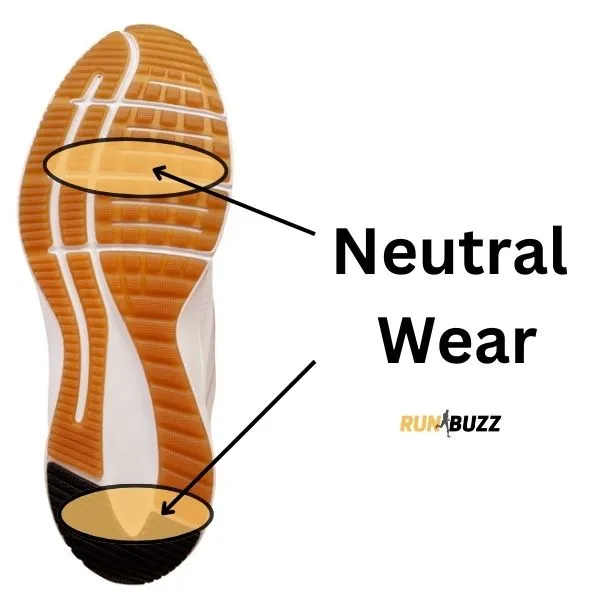
Neutral wear pattern. Wear runs up the middle of the forefoot from the outer heel. This is the most common pattern.
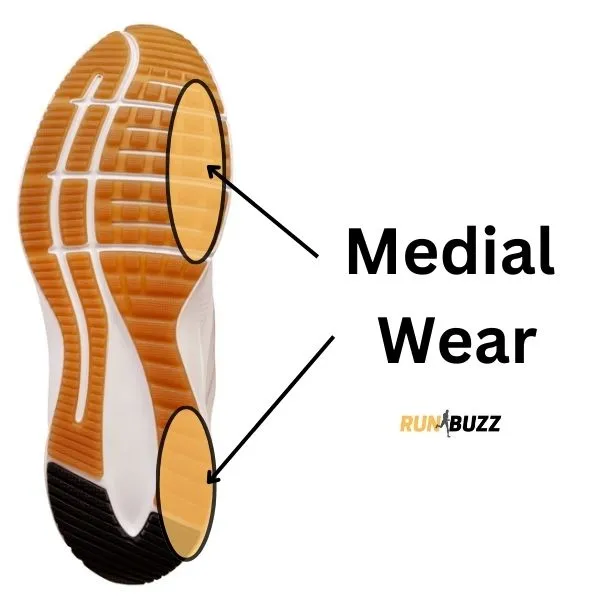
Medial wear pattern. Wear on the inner edge, which suggests more inward roll.
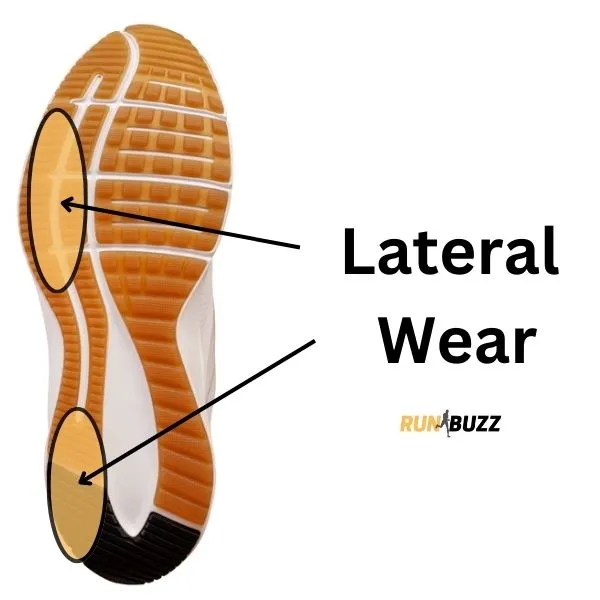
Lateral wear pattern. Wear on the outer edge, which suggests supination.
Treat this as information, not instruction. It tells you something about how you move. It does not tell you which shoe will keep you healthy, and the research is clear that it is a poor basis for a prescription.
Arch height and the wet test
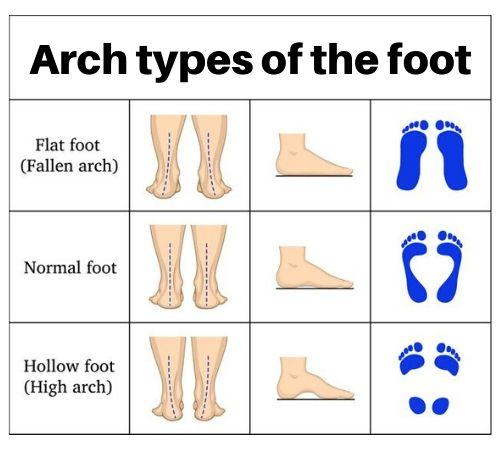
The wet test is the classic version of this: wet the bottom of your foot, step on a paper bag, and look at the shape. A full footprint suggests a low arch, a narrow band suggests a high arch, and something in between is normal.
It is a fun thing to do once. What it is not is a shoe prescription. Arch height turns out to be a weak predictor of what shoe will work for you, which is exactly why the shoe finder does not ask about it.
Arch height does matter for one practical thing: if you have a high arch and a shoe feels like it is pressing into it, that shoe is wrong for you no matter what category it is in. Trust that feeling.
Cushioning is a preference, not a spec
Cushioning will be one of the biggest factors in how a shoe feels, and it is genuinely worth thinking about before you shop.
Maximum cushioned shoes offer the highest level of shock absorption. They work best for runners who want the highest degree of comfort, for recovery days, and for runners with larger frames.
Minimally cushioned shoes offer a thin layer of protection underfoot but let you feel the ground. These can work well for strengthening the feet, but they require a much longer adaptation period than most runners expect.
Most runners are happiest somewhere in the middle. There is no correct answer here, which is why the shoe finder asks how you like a shoe to feel rather than telling you how it should feel.
When a stability shoe does make sense
None of this means stability shoes are useless. I still recommend them regularly. The difference is why.
If stability shoes have felt good to you in the past, keep buying them. If you have had a specific injury and a physical therapist recommended more support, follow that advice over anything in this article. And some runners simply prefer the feeling of a shoe that holds their foot a little more firmly, which is a completely legitimate reason.
What I would not do is buy a stability shoe purely because a wet test or a thirty second treadmill video put you in a category. Modern stability shoes like the Brooks Adrenaline, Saucony Guide and HOKA Arahi are far gentler than the rigid motion control shoes of fifteen years ago, and plenty of neutral runners are perfectly happy in them.
How to actually buy them
Find two or three models that match how and where you run, then try them against each other. If all else is equal, choose the shoe that feels best. That has always been the advice in this guide and it is still the right advice.
A good local running store is worth your money here, even if you end up buying online later. Being able to put three shoes on your feet and run in them beats any amount of research, including mine.
Ready to narrow it down? Start with the Running Shoe Finder. Answer as much or as little as you want, compare what comes back, then go try the top two or three on.
Happy running!
Related Articles

Related Podcast Episodes
Dive deeper into this topic with these episodes from the RunBuzz Running Podcast.
Episode 159
Running Gear Fabrics That Keep You Cool, Warm, And Comfortable
Episode 157
Running Form, Cadence, Footstrike and Shoes - Injury Prevention with Brodie Sharpe
Episode 109
Stay Safe! Essential Safety Tips For Runners
Episode 21