
How to Build Mental Toughness for Running: A Coach's Guide
 Steve Carmichael·Last updated
Mental toughness is a skill every runner can develop. It is not something you are born with. It is built through practice, habit, and a willingness to push past your comfort zone — even when it is uncomfortable.
In this article, I share practical strategies I have used with the runners I coach to help them develop grit and resilience. If you apply these techniques to your daily life — whether out on a run or just trying to get out the door — you will become a stronger, more consistent runner.
Quick Navigation
- Getting Outside Your Comfort Zone
- Is a Lack of Mental Toughness Holding You Back?
- Pushing the Boundaries
- What the US Military Learned About Grit
- 5 Strategies for Building Mental Toughness
- Final Thoughts
- A Coaching Story: When Talent Is Not Enough
- How Our Mindset Is Wired
- Action Item: Your Mindset Inventory
In a previous article, I discussed willpower and how you can develop it. Just like training for a race, we have to train our willpower. Mental toughness works the same way — we do not develop it on a whim. It takes consistent practice.
Building Mental Toughness Requires Getting Outside Your Comfort Zone
Let me ask you this. Have you ever come across someone who refuses to step outside their comfort zone?
Maybe it is someone who will only run when the temperature is between 60 and 70 degrees and sunny. A fair-weather runner. Or maybe you know someone who drives around a parking lot for 10 minutes looking for the closest spot because they do not want to walk an extra 50 feet.
I get it. We often fall into the trap of wanting to be as comfortable as possible. But when it comes to challenging ourselves, attitude is everything.
The more you expose yourself to challenges with a positive attitude, the more you develop the mental toughness to endure. You might even find it is not that bad.

Is a Lack of Mental Toughness Holding You Back?
I hear from people all the time who want to run a half marathon but use excuses like:
"I didn't get my run in because it was too cold."
"I don't run in the rain."
Each of us has a tolerance level, and it is an individual thing. But I would bet most of us do not push it as much as we should. We settle into that comfort zone and rarely peek out.
Where is that comfort zone for you?
The Runner Who Refused to Do Hills
I once ran with a runner who refused to do hill workouts because "I don't do hills." She did not like them. And that would be fine — except her real reason was that hills made her tired.
Seriously? That is what they are supposed to do.
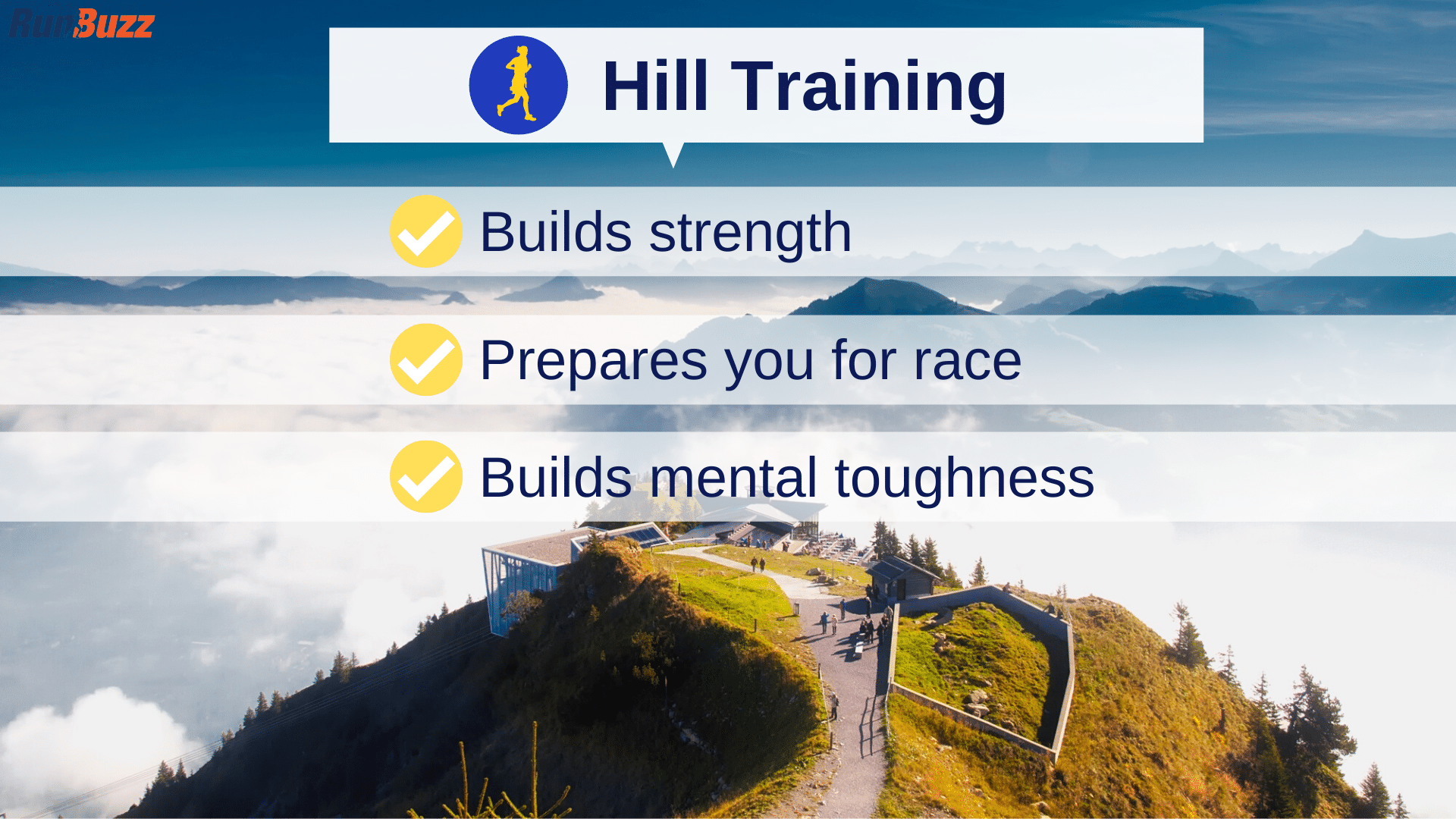
Hill training helps you do 3 things:
- Build leg strength by adding resistance (gravity) and changing the angle of muscle activation
- Prepare for race terrain — even in flat areas, race directors have a talent for finding a hill in the last mile
- Build mental toughness — hills challenge you physically, which challenges your mental resolve
The outcome is totally worth it. Hills make you strong — mentally and physically. Learn how to run hill repeats here.
Pushing the Boundaries to Keep the Mind Tough
There are times when it is perfectly fine to take the easy way — to skip the cold run, or park a little closer. However, to keep our minds strong, we have to pick times where we challenge ourselves and do the difficult things.
We have to push ourselves across the boundary of what we think our limits are so that — and here is the important part — the next time we need to persevere, the boundary has moved a little further out. This makes the next time easier.

What the US Military Learned About Mental Toughness
One of the best studies on mental toughness was done for the US Military. I first read about it on James Clear's website. You can read the original study here.
Each year, approximately 1,300 cadets join the entering class at West Point. During their first summer, they must complete a brutal series of tests known internally as "Beast Barracks" — deliberately engineered to test the very limits of cadets' physical, emotional, and mental capacities.
You might think the cadets who made it through were bigger, stronger, or smarter than their peers. But you would be wrong.
Researcher Angela Duckworth tracked 2,441 cadets across two entering classes, recording high school rank, SAT scores, leadership scores, physical aptitude, and what she called the Grit Scale — a measure of perseverance and passion for long-term goals.
The finding:
It was not strength, smarts, or leadership potential that predicted success. It was grit. Cadets who scored one standard deviation higher on the Grit Scale were 60% more likely to finish Beast Barracks. Mental toughness — not talent, intelligence, or genetics — made the difference.

5 Strategies for Building Mental Toughness in Running
Building mental toughness is not something you can do in a single workout. It requires establishing a pattern of habits. It is more closely related to habit formation than to suffering or pushing through pain.
Suffering is not necessarily an indication of mental toughness. You can suffer and not be mentally tough. To build mental toughness, you do not need extreme pain — you just need to consistently cross the line where your comfort zone ends, and build from there.
My "mailbox" story:
When I first started running, I could not run more than a couple of hundred yards. A small victory for me was getting to the next mailbox on my street. My comfort zone was always at the last mailbox. I did not go out and suffer through five miles on my first run. I just created an attitude where I would push past my boundary a little more each time. Each time it got a little easier, and my mind learned that I could always get to the next one.
1. Mental Toughness Is Not an Automatic Byproduct of Training
Many runners view mental toughness as a byproduct of putting in miles — something that develops automatically as you run more often.
We certainly get better physically with training, but unless we deliberately push ourselves, we tend to stay in the comfort zone. The challenge is balancing injury risk with growth through tough conditions. We need to be self-aware enough to know where we are and commit to testing ourselves with challenges that push us. When we do that in a repeated, habit-forming way, we build our ability to endure and overcome.

2. Find Your Zone Through Meditation-Like Focus
One powerful technique is taking yourself temporarily out of the situation — not physically, but mentally.
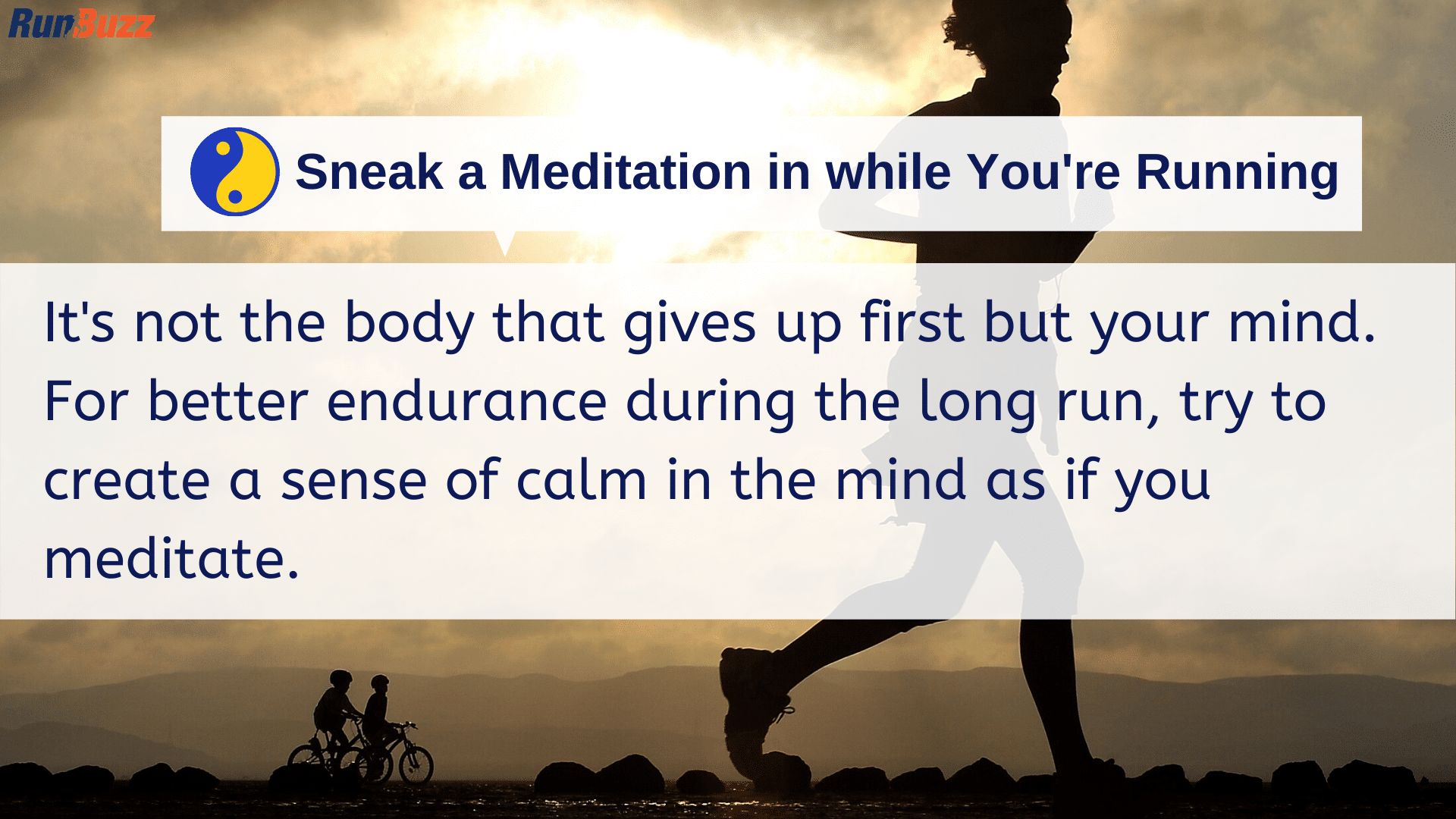
When studying world-class endurance athletes, researchers found that they respond to race stress with a reduction in brain wave activity similar to meditation. The average person responds the opposite way — with increased brain activity that sometimes borders on panic.
Many professional athletes describe reaching a state where their body takes over in a calm, almost trance-like way — even at high intensity. Runners experience this "zone" from time to time, where everything flows and you become less aware of discomfort.
3. Use the Power of Positive Self-Talk
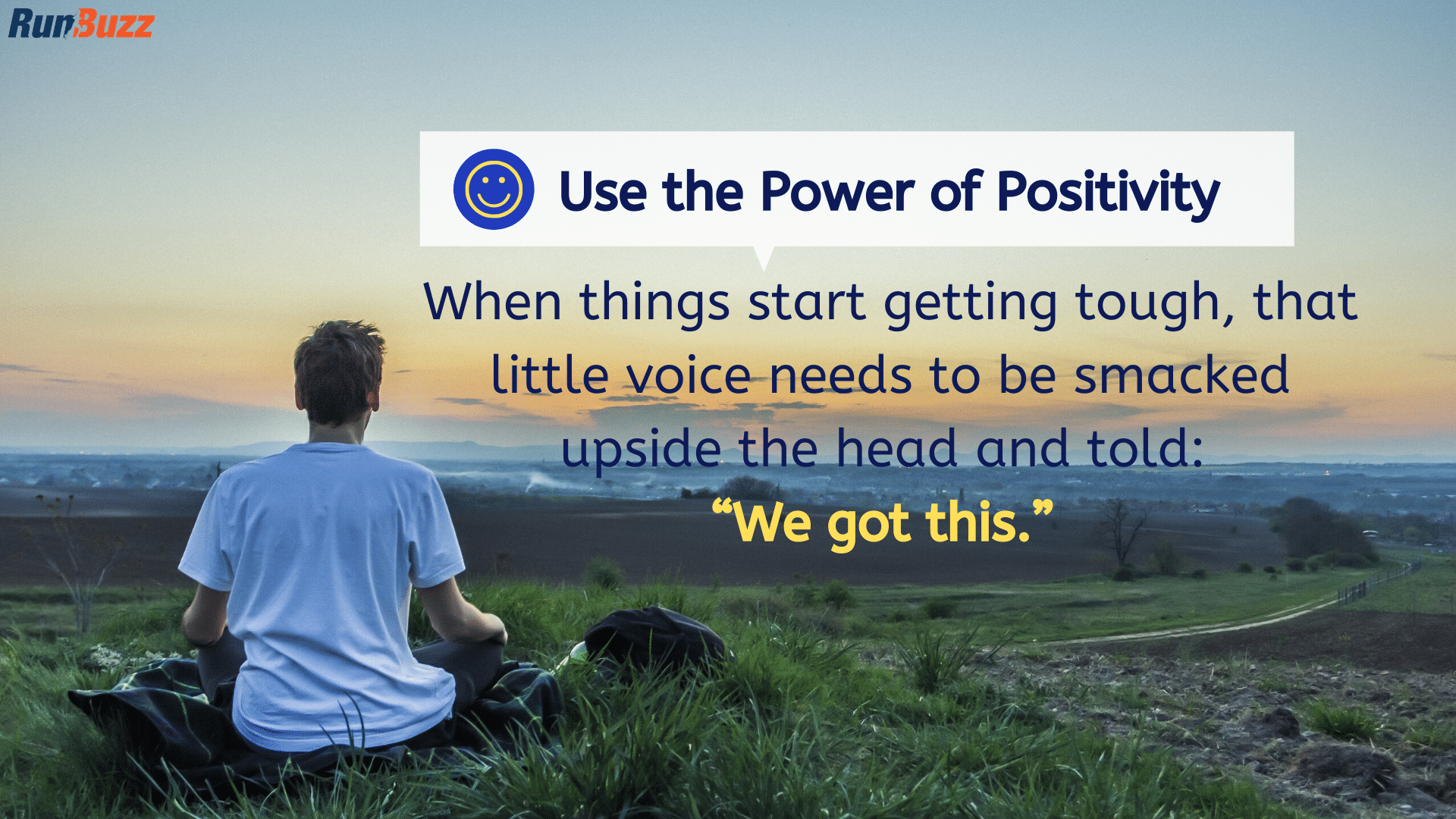
Attitude is everything. But taking that one level deeper — try being intentionally positive.
Repeating a mantra like "you got this" or "we are doing this" helps calm the negative dialogue we create in our minds. When things get tough, that little voice needs to be told: "We got this."
4. Visualize Your Race and Your Success
Visualization is a technique used in gymnastics, diving, ski jumping, and nearly every competitive sport. For runners, this means creating mental imagery of race day — imagining the course, the temperature, the crowd, how tired your legs feel, and how you push through.
Sports psychologists tell us that when you visualize well, your mind cannot tell the difference between visualization and reality. Through practice, your mind becomes more resistant to tough experiences because it has already "lived" them.
How to visualize effectively:
- Imagine as many details as possible — sights, sounds, sensations
- Practice repeatedly since you are not physically running during visualization
- Mentally rehearse how you would handle fears and obstacles on race day
- Focus on the solution, not the feeling of fear itself

5. Block and Distract When Things Get Tough
The final technique is distraction — deliberately shifting your attention away from discomfort.
When I get tired late in a race, I start doing things that distract my mind from the current situation. If there is a crowd, I count high fives. If not, I count dashed lines on the road. I count blue cars, silver cars, anything to take my mind off running.
I keep it simple — counting in blocks of 10 or 20 at a time. The goal is to pass through the tough spots and hopefully catch a second wind.

Final Thoughts
The key to building mental toughness is self-awareness and small daily habits that challenge your comfort level. It does not always have to be the same challenge — vary the ways you push yourself.
Over time, you will train your mind to handle struggles and tough moments. If you commit to this intentionally, you create the mental toughness of a champion and become a stronger runner in the process.
A Coaching Story: When Talent Is Not Enough
A year and a half ago, I coached a runner for about a month. I need to be careful how much I share, but this athlete had amazing natural talent. He was relatively new to running — under two years — yet had remarkable speed and endurance. He was not quite elite level, but I believed he could have been right up there with the next tier down if he wanted to be.
Unfortunately, I had to let him go as a client.
While he had amazing physical ability, he lacked motivation. He did not do the workouts. He made excuses. He would go out with friends until late hours the night before our sessions. He showed up late and once failed to show at all.
I told him I was not going to waste my time anymore. I could have kept taking his money, but since he would not follow through, I did not want him to be a reflection of my coaching.
The mind makes the body move. Always. There is no other way. Natural talent without mental commitment is not enough.

And then there is the other side of the spectrum — people who get so into running or exercise that they take things to extremes. Being disciplined is great, but it can be overdone. Mental training helps address both ends of the spectrum.
How Our Mindset Is Wired — And Can It Be Changed?
As runners, I estimate that 95% of our focus is on the physical side of training — the mileage, the cross-training, the pounding of pavement. But what if we are holding ourselves back because we are not addressing our minds?
We are often our own worst enemies. We relentlessly pursue physical improvement but leave the mind behind, hoping that a little more pain or suffering will make us mentally tougher as a side effect.
The Three Layers of Your Running Mindset
- Psychological core — your deepest beliefs, values, and sense of self-worth. The "real you."
- Typical responses — how you behave most of the time. Your default patterns as a runner and person.
- Role-related behaviors — how you change under specific circumstances, like performing under race pressure vs. a casual training run. These are the easiest behaviors to change once you identify the triggers.
The good news is that role-related behaviors — the ones most directly affecting your running performance — are the most changeable. When you learn what triggers certain behaviors, changing them becomes much more practical.
Example: Identifying Your Triggers
For me, late-night TV leads to a big bowl of buttery popcorn. That is my trigger. By DVR-ing my shows and watching them earlier in the day, I remove the trigger and avoid the popcorn. Willpower is like a muscle — it gets tired and you only have so much of it each day. Knowing your triggers lets you work around them instead of fighting through them.
Action Item: Your Mindset Inventory
Please do not skip this step. Get a journal or a couple of blank sheets of paper. What you write down will be used over time as you develop your mental training skills.
Page 1: Feelings You Frequently Struggle With
Write down feelings that jump out at you as tendencies — not every feeling you have ever had, just the ones you notice recurring. These are all normal feelings. Here are some examples to get you started:
You may notice these are all negative. That is OK — we are not going to dwell on the negative. In fact, the opposite will be true. But we need to identify them first.
Page 2: Symptoms and Behaviors You Want to Change
Look at your daily and weekly routines and list things that may indicate you are not reaching your potential, or things you would like to change. This will be different for everyone. Here are examples:
- "I don't think I can do ___ " (half marathon, 5K, marathon)
- "I don't think I am ready for ___"
- "I haven't been able to stick to ___ before"
- Feeling stuck in a plateau
- Frequently missing workouts
- Feeling frustrated after missing a goal
- Giving up when things get tough
- Low energy, especially late in the day
- Finding reasons NOT to work out
- Engaging in negative self-talk
- Binge eating or excessive snacking
- Obsessing about the scale every day
- Putting things off because you do not feel like doing them
- Struggling to get out of bed in the morning
No one will see these but you. Make an honest assessment. The purpose is identification — calling out the areas we can work on so we have a foundation for developing the mental strategies to address them.
Related Articles



Related Podcast Episodes
Dive deeper into this topic with these episodes from the RunBuzz Running Podcast.
Episode 154
Building Self-Esteem and Confidence Through Running With Sandra Mikulic
Episode 140
Getting Through Trying Times and How To Maintain Your Running Mindset With Irene Bosco
Episode 114
Ryan Hall - Olympic Athlete And Pro Runner On Mindset and Running Goals
Episode 46