
8 Cross-Training Activities for Runners
 Steve Carmichael·Last updated
Cross-training is the work you do that is not running, but still makes you a better runner. Done well, it keeps your aerobic engine running while your legs get a break from impact. Done badly, it is just extra fatigue with no payoff.
This guide covers the eight options I recommend most, what each one is actually good for, and how to fit them into a running week without wrecking the running itself.
Cross-training does three different jobs. Be clear which one you are after before you pick an activity:
- Replacing running when you are hurt and cannot run at all
- Adding aerobic volume when your legs cannot absorb more mileage but your heart and lungs can
- Fixing what running neglects, which mostly means strength, mobility and upper body
Those three goals point at different activities. Picking the wrong one is the most common mistake I see.
Does cross-training actually work?
For replacing running, yes, and the evidence is better than most runners expect.
A six-week study of 32 trained runners assigned them to running, cycling or deep water running. The cross-training groups maintained both VO2max and two-mile run performance about as well as the group that kept running.1 That is the single most useful thing to know when you are injured: if you keep the aerobic stimulus, you do not lose the fitness you spent months building.
For making you faster, the clearest evidence is for strength work rather than aerobic cross-training. A 2023 systematic review and meta-analysis in Sports Medicine found that strength training improves running economy, with programs typically running six to 24 weeks at one to four sessions per week.2
What I would not promise you is that cross-training prevents injuries on its own. It reduces impact load, which matters, but training load management is the bigger lever. Treat cross-training as a way to run more sustainably, not as injury insurance.

Option 1
Cycling
- Replaces running
- Adds aerobic volume
Road cycling, spinning or a stationary bike all work similar muscles to running, which makes cycling one of the closest aerobic substitutes when you need time off your feet.
How to do it: match the effort, not the clock. A rough rule is that a bike session needs to run roughly one and a half times as long as the run it replaces to deliver a similar aerobic load. High-power intervals work your legs harder than running does, without the impact, which makes the bike a genuinely good place to do hard aerobic work while injured.
Coming back: the bike keeps your aerobic engine sharp, but it does not load tendons and connective tissue the way running does. Rebuild your running volume gradually and let the legs re-adapt to impact on their own schedule. Our guide to getting back to running after time off walks through that progression.
Option 2
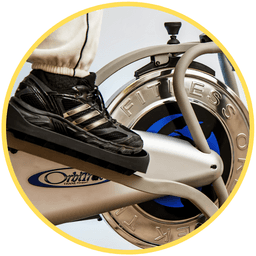
Elliptical
- Replaces running
- Closest to running form
Ellipticals were designed to mimic the motion of running while removing the impact, and of everything on this list the movement pattern is the closest match.
How to do it: keep your hands off the handles for at least part of the session. Letting your arms swing naturally makes it far more running-specific. Ellipticals work the quadriceps more than walking or stationary biking, and engage the gluteus maximus and vastus lateralis more than running does, while working the hamstrings slightly less. If weak glutes or hips are affecting your running form, one to two elliptical sessions a week is a useful place to work on that.
Coach’s tip: the machine carries some of your momentum, so watch your heart rate rather than trusting how hard the session feels.
Option 3
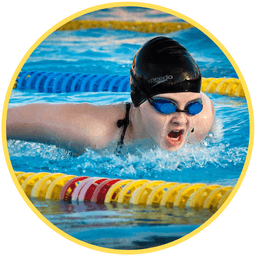
Swimming
- Zero impact
- Trains what running skips
Swimming is a serious cardio workout, and it also helps with breath control, balance and flexibility.
How to do it: you get to choose which muscle groups do the work. Use a pull buoy and let your legs float if you want to save them entirely, or kick hard if you want the legs involved. For runners with a lower body injury, the pull buoy version means you can train hard without the injured area doing anything at all.
Coach’s tip: if your stroke is still a work in progress, swim short repeats with generous rest rather than long continuous laps. You will hold better form and reach a real aerobic effort while your technique catches up.

Option 4
Water Running
- Best when you cannot run
- Zero impact
I tried pool running for the first time a few years back and had a blast. It is zero impact but still taxes the cardiovascular system enough to be a real workout, which makes it the gold standard when you cannot run at all.
How to do it: use a flotation belt, called an aqua jogger, so you can hold good form in deep water without touching the bottom. Run intervals rather than steady laps, because the water makes it very easy to drift into an easy effort without noticing. Something like eight to ten repetitions of one minute hard with one minute easy will feel far more like a workout than 30 minutes of steady jogging.
Coach’s tip: bring a waterproof music player or a training partner. Intervals and company are what keep runners coming back to the pool.
Worth knowing: your maximum heart rate and oxygen consumption in deep water will read lower than on land, and that is normal rather than a sign you are slacking. Submaximal values line up closely with land running, and the gap narrows as you get more experienced at it.3

Option 5
Strength Training
- Trains what running skips
- Backed by research
I am always amazed by the number of runners I meet who do zero strength training. As long as I have been a runner, I have included at least one core-focused session and aim for two to three total body routines a week. It is also the one item here with direct evidence for making you faster.2
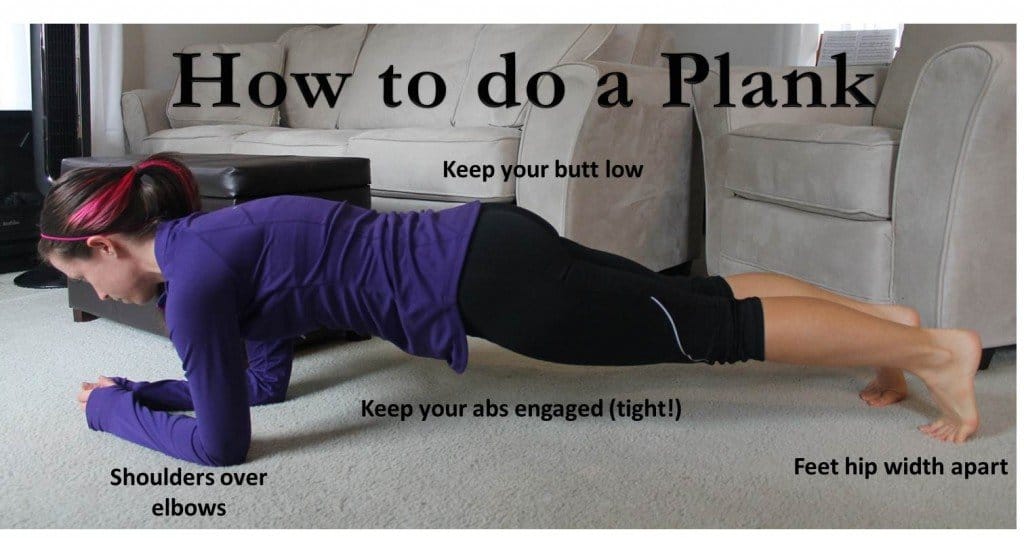
How to do it: when marathon training drains my energy for the usual schedule, I still do two essential moves: planks and push-ups. Both require zero equipment, take a few minutes, and strengthen the core and lower back muscles that hold your running form together late in a race. They also maintain upper body strength, which running alone neglects entirely.
Coach’s tip: schedule heavy leg work on the same day as your hard run, after the run, rather than the day before it. That keeps your quality running sessions sharp.
If you want the full progression, from stabilization work through to added load, I go through exactly how we build it in how to add strength training to your running program.

Option 6
Walking
- Active recovery
- New runners
Yes, walking. This is my favorite activity on active recovery days, and it is where I start new runners who are building the habit before the mileage.
How to do it: your legs move through a reduced range of the running motion with virtually no impact, which promotes blood flow without adding meaningful fatigue. Jeff Galloway built entire marathon programs around walk intervals inside runs as a way to extend endurance, and the same logic applies to recovery days.
Coach’s tip: use walking for what it is best at, which is recovery between hard days and building consistency early on.

Option 7
Yoga
- Mobility
- Trains what running skips
For runners who skip post-run stretching, and I am guilty of this, yoga is a useful way to maintain range of motion, particularly through the hips, hip flexors and thoracic spine.
How to do it: keep the hard sessions away from your hard running days. A long deep-stretch class the day before a workout can leave you feeling loose in a way that does not help you run fast. We put together 10 video demonstrations of yoga exercises specifically for runners.
Coach’s tip: aim it at the mobility you actually lack. Most runners get more out of ten focused minutes on hips and ankles than an hour of general stretching.
Option 8
Rowing
- Adds aerobic volume
- Trains what running skips
Rowing is the one I would add to the original list. It is non-impact, it is genuinely hard, and unlike everything else here it trains the upper back and posterior chain that runners chronically underuse.
How to do it: the stroke is roughly 60 percent legs, 30 percent core and 10 percent arms, and most beginners get that backwards and row with their arms. Spend ten minutes learning the sequence before you chase splits. Driving with the legs is also what keeps the load off your lower back.
Coach’s tip: intervals work better than long steady pieces for runners, since your hands and lower back will give out before your aerobic system does.
How to fit it into your running week
If you are healthy and running normally: one to two strength sessions a week, plus one easy aerobic cross-training session if you want extra volume without extra impact. Keep hard cross-training on the same day as hard running, so easy days stay genuinely easy.
If you are injured and cannot run: deep water running or the elliptical, at the frequency and duration you would have run. Replicate the structure of your normal week, including a long session and a hard session. That is what preserved fitness in the research.1
If you are coming back from time off: keep one or two cross-training sessions in place while you rebuild mileage. It lets you hold aerobic fitness while running volume comes back gradually.
Three mistakes to avoid
- Turning easy days into hard cross-training days. The most common error by far. If your recovery day becomes a spin class, you have not recovered, you have just moved the load somewhere else.
- Matching duration instead of effort. Thirty minutes on a bike is not thirty minutes of running. Aerobic cross-training generally needs more time to deliver the same stimulus.
- Waiting until you are injured to learn it. The worst time to figure out pool running is the week after a stress fracture diagnosis. Try each of these once while you are healthy so you know what you are doing when you need it.
If you want help working out which of these fits your training and your schedule, that is exactly the sort of thing we sort out in online run coaching.
Happy running!
Sources
- Eyestone ED, Fellingham G, George J, Fisher AG. Effect of water running and cycling on maximum oxygen consumption and 2-mile run performance. American Journal of Sports Medicine, 1993. PubMed 8427367
- Llanos-Lagos C, Ramirez-Campillo R, Moran J, Saez de Villarreal E. Effect of Strength Training Programs in Middle- and Long-Distance Runners' Economy at Different Running Speeds: A Systematic Review with Meta-analysis. Sports Medicine, 2023. PMC11052887
- Killgore GL. Deep-water running: a practical review of the literature with an emphasis on biomechanics. The Physician and Sportsmedicine, 2012. PubMed 22508258
Related Articles



Related Podcast Episodes
Dive deeper into this topic with these episodes from the RunBuzz Running Podcast.
Episode 158
How To Acclimate To Cold Temperatures So You Can Enjoy Winter Running
Episode 150
Why Hips and Glutes Are Important To Running With Mallory Reynolds
Episode 132
Cold Weather Running Tips With Coach Shawn Musgrove
Episode 125