
How to Get Rid of Shin Splints and Prevent Them from Coming Back
 Steve Carmichael·Last updated
If you want to get rid of shin splints, you have come to the right place. Shin splints are one of the most common overuse injuries in runners — especially new runners or those who increase their workout intensity or volume before their legs are ready.
In this article, I cover what shin splints are, what causes them, how to treat them, and how to prevent them from coming back. All from a running coach's perspective.
Quick Navigation
- What Are Shin Splints?
- Symptoms of Shin Splints
- What Causes Shin Splints?
- How to Get Rid of Shin Splints
- Can Shoes or Orthotics Help?
- How to Return to Running After Shin Splints
Medical Disclaimer: This article provides general information from a running coach's perspective. It is not a substitute for medical advice, diagnosis, or treatment. If you have a medical concern, consult your health care provider immediately. Never disregard professional medical advice because of something you read here.
What Are Shin Splints?
Shin splints are an overuse injury that can be quite painful and equally frustrating.
Pain occurs when there is inflammation in the muscles, tendons, and bone tissue surrounding your tibia — specifically where the tendons attach to the bone.
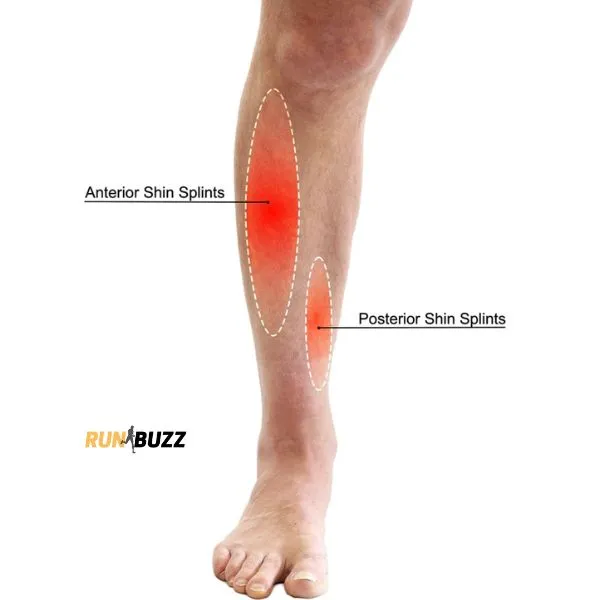
The tibia is one of two main bones just below your knee and above your foot — most of us call it the shin bone.
Along the tibia are two primary muscles:
- Tibialis anterior muscle — lifts and lowers your foot
- Tibialis posterior muscle — supports the foot during the weight-bearing phase of your foot strike as your foot naturally pronates to absorb impact
A weak tibialis posterior muscle can lead to arch collapse during weight-bearing, placing additional stress on your lower leg.
Since running is a high-impact activity, these muscles, their tendons, and the connecting bone tissue get inflamed and painful when we try to do too much before our body has adapted.
Symptoms of Shin Splints in Runners
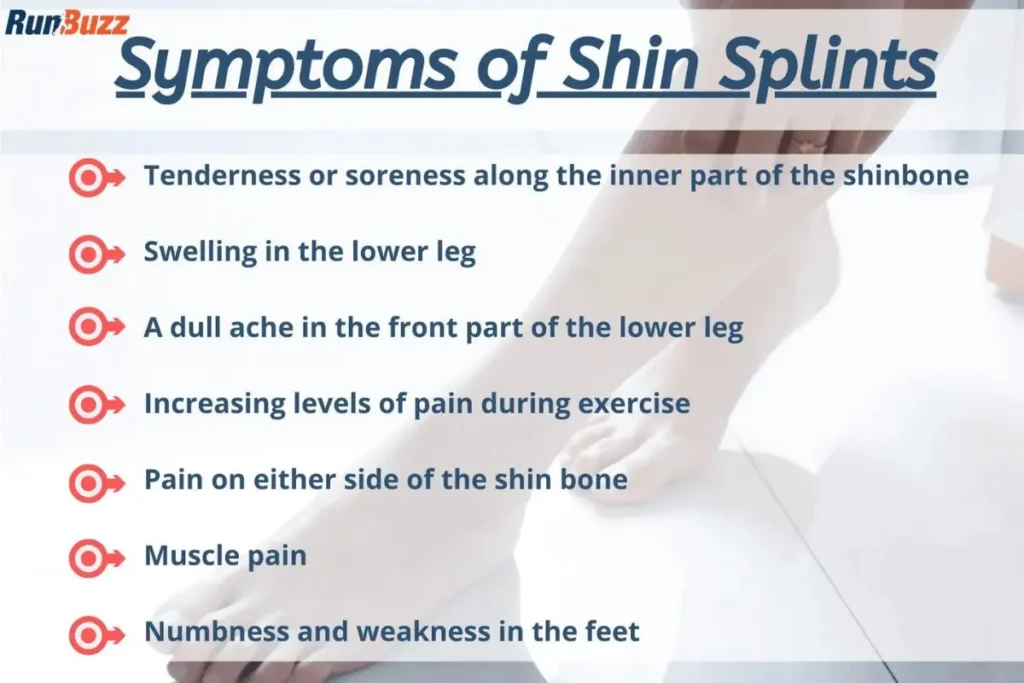
Shin splint pain is most often felt on the front or inner edge of your shin:
- Front or inside-front pain → most likely Anterior Tibial Stress Syndrome (anterior shin splints)
- Inside and back pain → most likely Medial Tibial Stress Syndrome (posterior shin splints)
Shin splint pain often feels like tiny razors digging into your bone. Early signs include a dull or throbbing sensation in the areas mentioned above. You can often press and feel a sore spot along the shin.
The pain usually starts shortly after beginning a run and can last throughout the run and afterward. It often becomes severe enough to force you to stop running.
Shin Splints or Stress Fracture?
Other conditions can cause similar shin pain. If your pain does not resolve or improve after a few days to a week of rest and reduced running — or if pain is extreme or shows signs of swelling — see your doctor and have your lower leg examined.
When chronic inflammation goes untreated, shin splints can progress into tendonitis, larger tears, or stress fractures as the bone starts to break down. If you are not sure what you have, get it checked out.
What Causes Shin Splints in Runners?
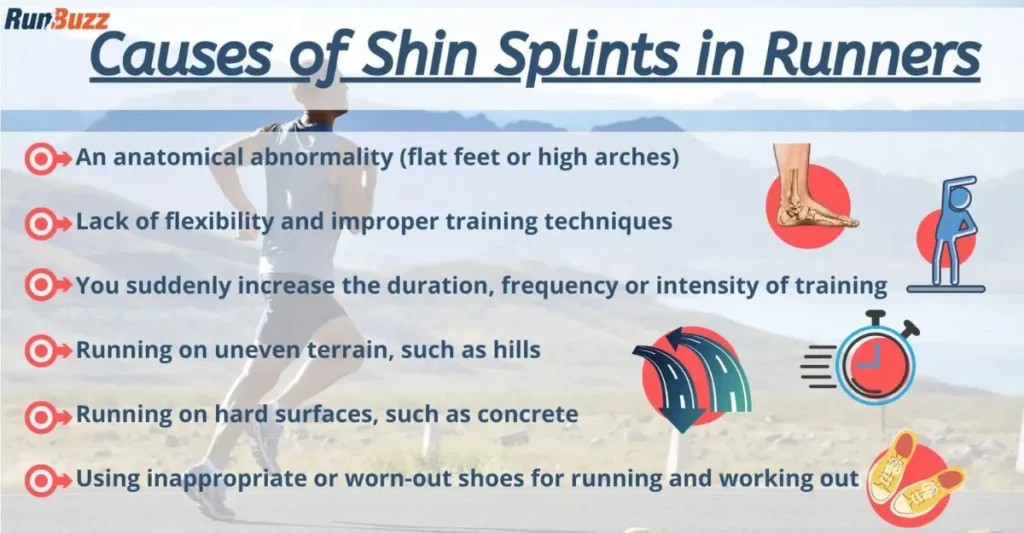
Shin splints are first and foremost an overuse injury. They can be aggravated by poor footwear, flat feet, or poor foot anatomy — but they primarily develop from sudden changes in activity level that increase stress on your bones and tendons.
As your muscles are used repetitively during running, they pull on the tendons and can start to microscopically tear and become inflamed where the tendons attach to the bone.
Shin Splints in New Runners
Shin splints are most common in new runners or those coming back after a long layoff. New runners are often newly motivated and find themselves doing too much, too early.
The most common cause is running day after day with little to no rest days, or running farther than your body is ready for. Running too much too soon will systematically break down your tissues. If your body is not prepared to handle the impact, shin splints or stress fractures can occur.
Shin Splints in Experienced Runners
Experienced runners are also prone to shin splints, although it is less common. Examples include:
- Suddenly increasing from 3 days per week to 6 days per week
- Adding hills or track workouts without a gradual ramp-up
- Switching surfaces abruptly (treadmill to pavement, or vice versa)
How to Get Rid of Shin Splints
Getting rid of shin splints is a fairly straightforward process. First, we need to apply the RICE principle — a common protocol for treating overuse injuries. Then, and only then, do we work on flexibility and strength training once the injury has started to heal.
"Running through shin splints, or jumping straight to stretching and strength training before you have started the healing process, is a common mistake."
Step 1: Apply the RICE Protocol
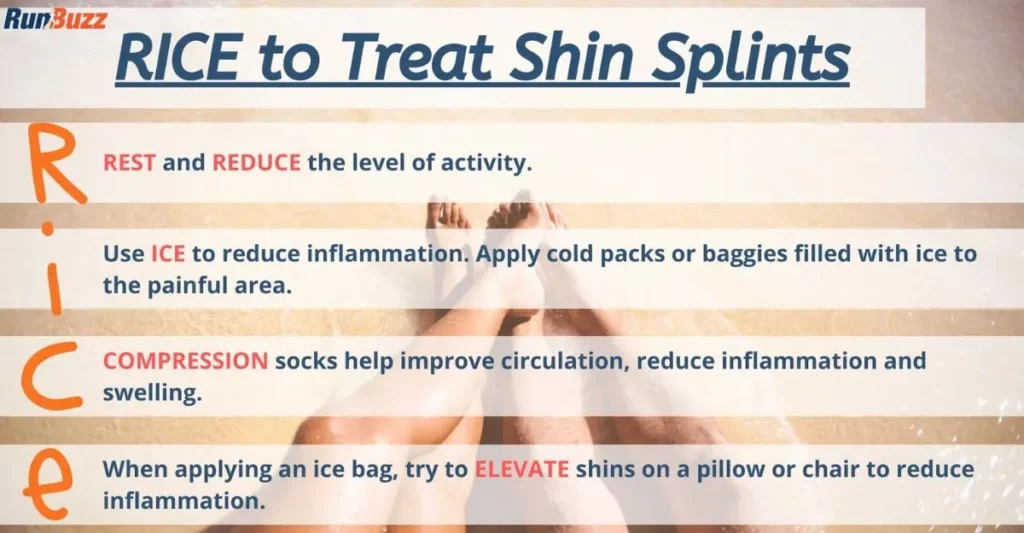
R — Rest
Since shin splints are an overuse injury, you need to dramatically reduce your activity level. This usually means taking a few days off from running or switching to low-impact cross-training like swimming or cycling.
- Experienced runners: A day or two off, followed by a couple of walking days and a slow, gradual ramp-up is usually enough
- Beginners: You may need additional time off, followed by a gradual comeback through run/walk intervals combined with flexibility and strength training
A strong muscle is an injury-resistant muscle that helps your body absorb running impact. A flexible muscle helps reduce the tension applied to tendons and bones.
I — Ice
Inflammation can be reduced by frequent icing, especially right after exercise or injury onset. Apply cold packs or baggies filled with ice to the area off and on throughout the day. Never apply ice directly to the skin — use a hand towel as a barrier.
C — Compression
Compression socks after exercise can help but are often not essential. Compression reduces inflammation and swelling, and can make you feel better due to increased circulation and flushing of lymphatic fluids from the area.
E — Elevation
With shin splints, elevation is less critical. Shin splints rarely involve significant swelling.
Step 2: Strengthen and Stretch
Light stretching and simple strength training exercises can help you increase flexibility and build the strength needed to better absorb running impact.
As a certified running coach and personal trainer, I work with runners all the time who benefit from targeted strength training. Some of my favorite exercises for shin splints include:
- Single-leg balance and stability drills
- Calf stretches and calf raises
- Heel drops and heel raises
- Hamstring stretches
- Hops and jumps (once pain has subsided)
- BOSU ball exercises
Important: Do NOT run through shin splints!
Give your legs a few days to start healing and reduce inflammation before introducing stretching and strength training. Cut your training volume by 50% or more and slowly work your way back up.
Can Shoes or Orthotics Help with Shin Splints?
The honest answer is maybe. While most advice on this topic is well-meaning and can sometimes help, the reality is that shoes and orthotics rarely solve a running injury by themselves. They are tools, not cures.
Orthotics can help if you have very high arches or flat feet, but the vast majority of runners do not need them.
A temporary, inexpensive over-the-counter insert has been helpful for some of my coaching clients. It works by temporarily removing stress from the injury site so the overall load is reduced, allowing your body to heal.
Similarly, a shoe change or new shoes may help. Most running shoes should be replaced every 300-500 miles. However, only change shoes or add orthotics after you have addressed your training issues and cut back your volume first.
How to Return to Running After Shin Splints
When returning to running after shin splints, the process must be methodical and slow.
Before you resume running:
- Be pain-free for at least a few days to a week
- If your shin splints were severe, wait two weeks before returning
- Do not rush back
Your Return-to-Running Protocol
- Start with a 10-15 minute dynamic warm-up. Find exercises that slowly increase your heart rate and involve movement — lunges, high knees, squats, hip flexor stretches, jumping jacks. This is not static stretching where you hold a position.
- Do easy walk/run intervals. If pain returns, stop, take a rest day or two, then repeat. You may need to repeat this several times before you see progress.
- Once you can walk/run pain-free, slowly resume training starting at about 50% of your pre-injury volume. Gradually increase over the next few weeks.
- If pain returns mid-run, cut the run short. Try again in two days, running just short of where the pain started. If you can maintain that distance without pain, slowly add distance on subsequent runs.
Running through pain will only make your shin splints worse or lead to more severe, chronic injury.
In the following video, Bob and Brad — two physical therapists with an excellent YouTube channel — share their pro tips for getting rid of shin splints:
Related Articles



Related Podcast Episodes
Dive deeper into this topic with these episodes from the RunBuzz Running Podcast.
Episode 157
Running Form, Cadence, Footstrike and Shoes - Injury Prevention with Brodie Sharpe
Episode 150
Why Hips and Glutes Are Important To Running With Mallory Reynolds
Episode 143
Pain, Injury, and Running With Brodie Sharpe
Episode 141