
9 Steps to Get Rid of Plantar Fasciitis and Get Back to Running
 Steve Carmichael·Last updated
Plantar fasciitis is a common overuse injury that impacts a lot of runners. And it can be tricky to get rid of. To make matters worse, many runners who develop plantar fasciitis overlook the early signs of injury or fail to take the necessary steps that could prevent it from getting worse.
But when addressed early, plantar fasciitis is fairly easy to resolve, especially if you use a multi-pronged approach.
Quick Navigation
- Symptoms of Plantar Fasciitis
- What Causes Plantar Fasciitis?
- How Long Does It Take to Heal?
- 9 Steps to Get Rid of Plantar Fasciitis
- Final Advice on Recovery
- When to See a Doctor
- My Personal Plantar Fasciitis Journey
In this article, I share 9 steps that you can take right now to get rid of plantar fasciitis.
Disclaimer: This article is written from the perspective of a running coach who has worked with numerous runners to address plantar fasciitis before medical intervention was needed. This is training advice, not medical advice. Please consult a physician or physical therapist if you are unsure about your injury or are in severe pain.
Amazon affiliate disclosure: As an Amazon Associate I earn from qualifying purchases. This means that when I link to products on Amazon and you purchase something, I may get a small commission at no extra cost to you.
Symptoms of Plantar Fasciitis
Plantar fasciitis (PF) is inflammation of the plantar fascia tissue that connects your heel bone to your toes. The classic symptoms are pain and tightness in the heel and arch.
Characteristics of Plantar Fasciitis Pain
- Dull or sharp pain in the heel and arch
- A burning sensation in the foot
- Can develop slowly or come on suddenly after intense training, running, or jumping
- Pain in the morning with your first steps that loosens up as the day goes on
- Pain after long periods of sitting or standing, and when going upstairs
What Causes Plantar Fasciitis?
Plantar fasciitis can affect runners of any experience level for a number of reasons:
- Rapid increase in running intensity, distance, or frequency
- Not following the right training plan for your experience level
- Poor running mechanics
- A sudden change in running surface
- Ignoring early signs of heel and arch pain
- Inadequate footwear
- Lack of stretching and tight muscles
- Aggressive hill training, especially downhill running
How Long Does It Take to Heal Plantar Fasciitis?
Depending on the severity, recovery may take a couple of weeks, around 6 months, or even more than a year.
The earlier you take action against plantar fasciitis, the faster you will heal and get back to training.
9 Steps to Get Rid of Plantar Fasciitis
Step 1: Take 2-3 Days Off to Reduce Initial Inflammation
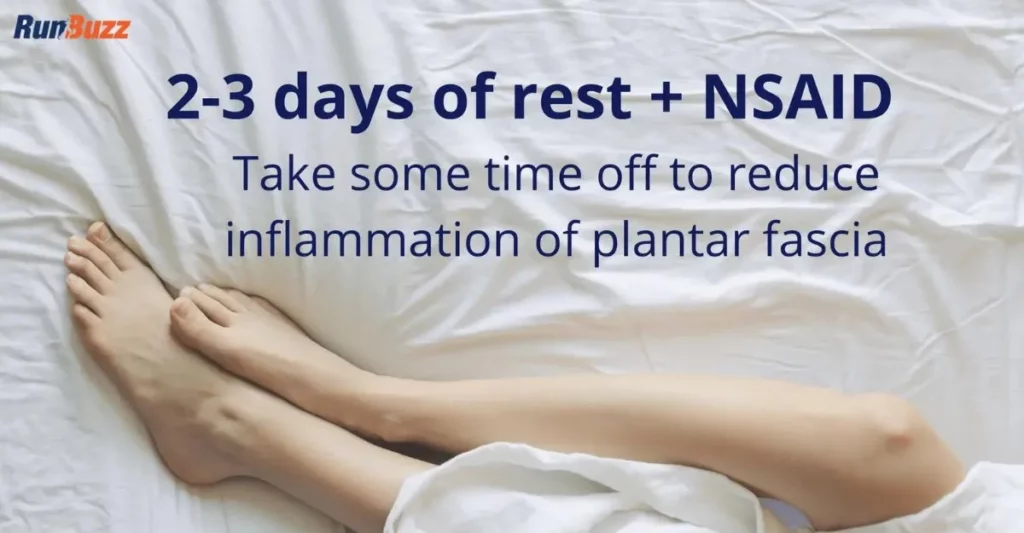
Plantar fasciitis occurs when micro-tears in the fascia become inflamed and painful. This is not an injury where total rest will fix it. I struggled with plantar fasciitis myself and took several months off from running. It came back the day after I resumed.
However, taking a few days off as soon as you notice that initial heel or arch pain can help reduce early-stage inflammation and jump-start the healing process. Then you can move on to other steps to heal faster.
Note on NSAIDs: Using an anti-inflammatory during the first day or two is OK to help reduce initial inflammation. However, NSAIDs should not be used long-term or to mask pain while running with plantar fasciitis.
Step 2: Ice Frequently During the First Few Days
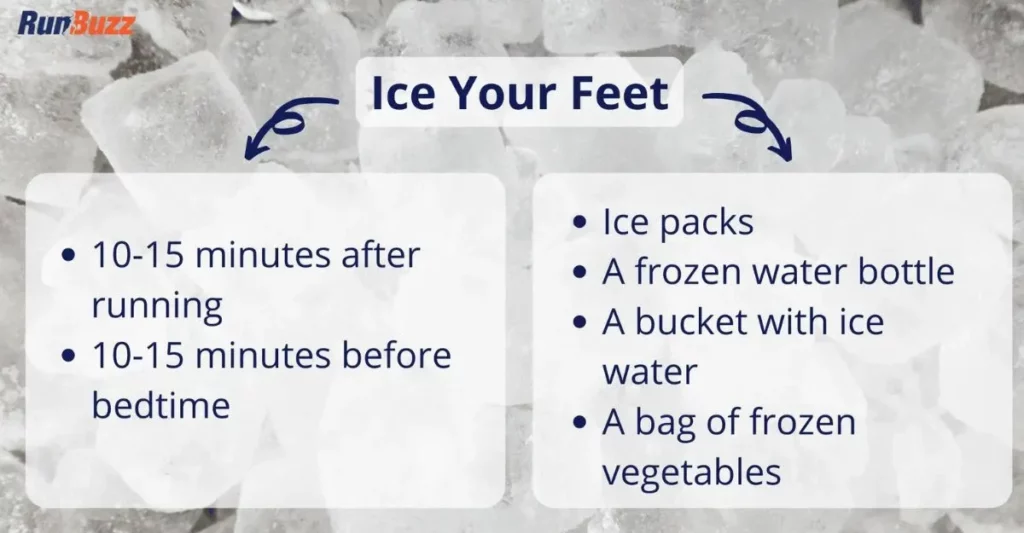
During the first few days of noticeable pain, ice your feet for 10-15 minutes a few times per day. You can use a frozen water bottle, ice packs, or even frozen bags of peas.
Ice helps reduce inflammation and pain. We want to settle the plantar fascia early, icing is most effective during those initial few days.
Step 3: Stop Going Barefoot and Wear Recovery Shoes
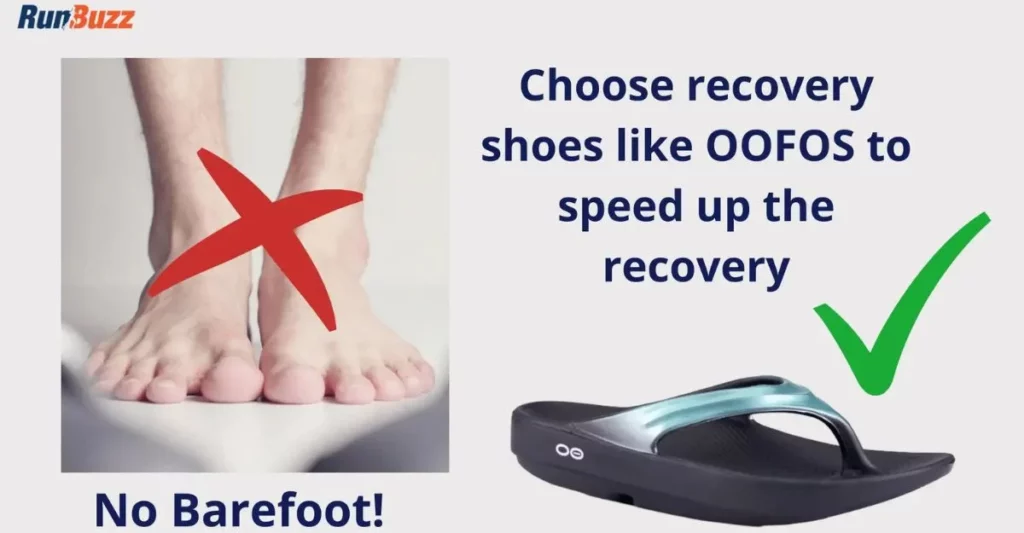
Going barefoot puts added stress on your newly injured feet. Instead, consider purchasing a pair of recovery shoes to speed up healing.
Oofos are the best recovery shoes for plantar fasciitis. Wearing them feels amazing even when you are not injured. I wear mine after long runs and when lounging around the house.
Seriously, get Oofos. You will thank me later, injured or not.
Step 4: Replace or Eliminate Unsupportive Work Shoes

What you wear at work can aggravate or even cause plantar fasciitis. Flat shoes do not support your arch. High heels place tremendous stress on your arches. Hard-sole shoes are also tough on your feet.
If possible, get permission to wear shoes with more support or even your running shoes at work. Getting out of my work shoes was one of the things that helped me the most during my recovery.
At the very minimum, add temporary plantar fasciitis insoles to help provide additional cushioning. Use them to transfer pressure away from the injured area while your fascia heals.
Step 5: Cut Running Volume by at Least 50%

When a coaching client first presents with heel or arch pain, the first thing I do is temporarily cut their volume by at least 50%.
With most cases of plantar fasciitis (unless a tear is involved), you can continue to run as long as pain is not severe enough to affect your form or make running no longer enjoyable.
Cutting volume in half allows you to continue training while giving your body time to recover. By dropping back to pre-injury loads, we prevent the injury from getting worse while keeping your body strong.
Step 6: Strengthen and Stretch the Plantar Fascia
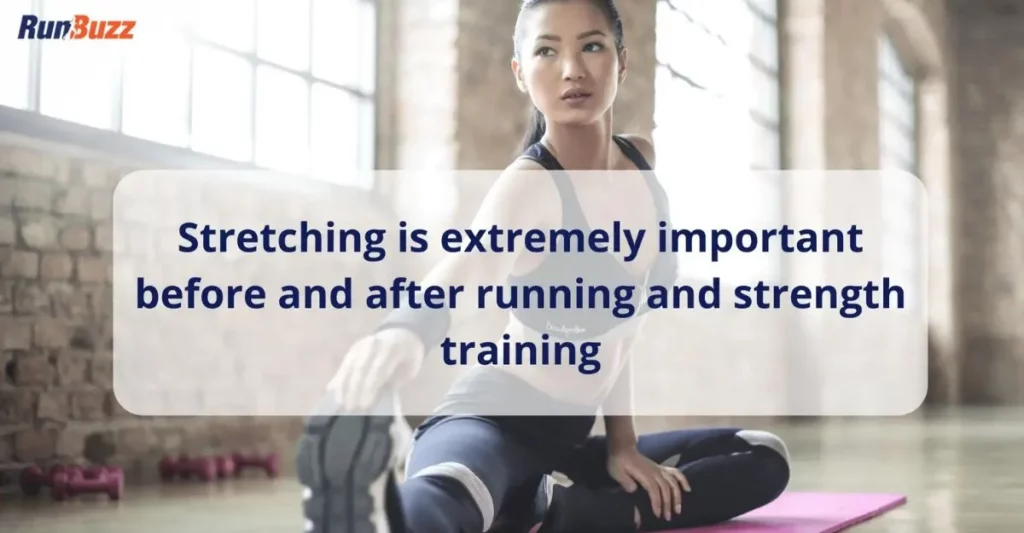
Once the initial pain starts to settle, you can begin introducing specific exercises that build strength and loosen up your lower legs:
- Single-leg balance drills and calf stretches increase flexibility and take pressure off the fascia
- Foot-strengthening exercises like towel scrunches build the small muscles that support your arch
- Regular stretching of your calves, Achilles, and feet is crucial for long-term recovery
Here is a great video with stretching exercises specifically for plantar fasciitis:
Step 7: Massage and Roll the Fascia Daily

To keep the fascia loose and promote healing, apply a cross-fascia massage using your hands or a massage ball. Instead of massaging along the length of your arch, rub perpendicular to the fascia, from the inside of your foot toward the outside.
Do this as often as you can.
In addition to your fingers, you can use a lacrosse ball or tennis ball to roll the fascia. I found that a lacrosse ball works best, a tennis ball is too soft and forgiving.
Step 8: Use Temporary Plantar Fasciitis Insoles
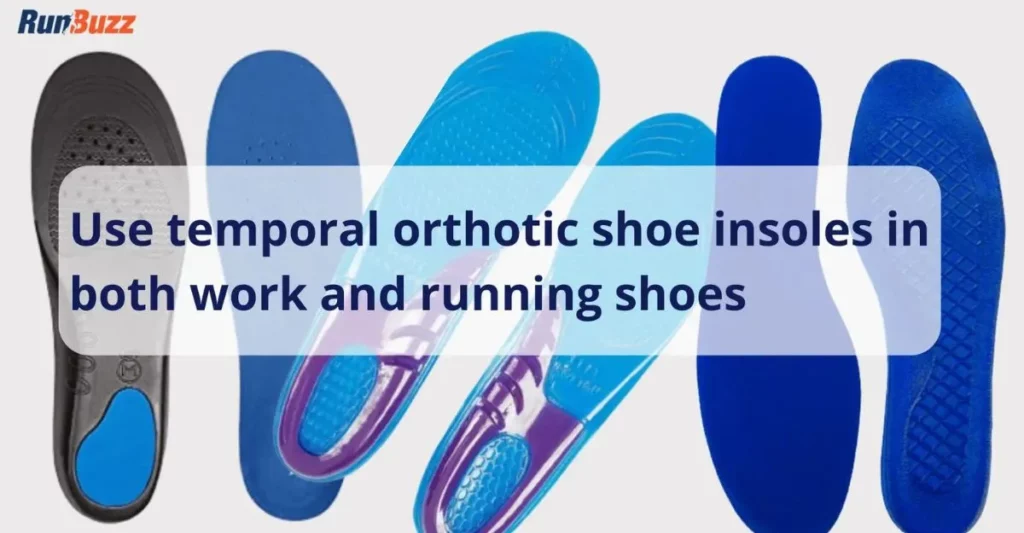
Unless you have a very specific foot anatomy that requires significant correction, I am generally not a fan of custom-molded shoe inserts from retail stores. Most runners do not need them if they follow a sound training program.
I actually had a well-known sports medicine doctor remove my shoe-store inserts and throw them in the trash.
However, a temporary, inexpensive over-the-counter insert like this one can work wonders when you are dealing with plantar fasciitis.
Why temporary insoles help
The value is not in the support they provide. It is in the temporary change they make to the pressure and shock absorption of your foot. They redirect impact away from the injured area to a healthier part of your foot, giving the fascia time to heal. This is NOT a long-term solution, use them in both work and running shoes until you recover.
Step 9: Return to Previous Training Levels Slowly
Once your pain drops below a 2 on a 1-10 scale, you can slowly return to your pre-injury training level.
The best approach is to follow a return-to-running program and gradually increase your training load. As you do, evaluate your pain along the way, especially the next morning when you get out of bed.
- If pain does not get worse or drops, you can handle the new volume
- If pain increases, step back and continue recovery
- Expect some fluctuation, the overall trend should be improving
Final Advice on Recovering from Plantar Fasciitis
There are lots of so-called remedies out there. So much so that it drives me crazy.
To get rid of plantar fasciitis, you need to be consistent, diligent, and patient. Treat your recovery as if it is your main training focus. Getting over plantar fasciitis is a process, and the sooner you start, the more likely you will achieve pain-free running.
I have helped dozens of runners with plantar fasciitis, and in almost every case, no single product or tip worked on its own. It was always a combination of several things, including addressing the training mistakes that caused it in the first place.
Real Example: Catching It Early
One of my past clients, Carrie, came to me with plantar fasciitis. During our initial coaching call, I quickly identified that she was ramping up for her half marathon too fast. We took immediate steps, like those in this article, to get ahead of it early. I modified her training, she went all-in on recovery, and we resolved her plantar fasciitis in about two weeks. When caught and addressed early, it usually can be resolved quickly. If you continue to run through the pain, the injury can become chronic and take months or even years to get over.
When to See a Doctor
If pain is severe enough that you cannot function normally in your day-to-day activities, or you have gone through all the steps above and the pain remains, do not hesitate to consult a sports medicine doctor or physical therapist.
Sometimes the injury is more complicated than expected, and an accurate diagnosis may reveal an underlying cause of pain that requires medical intervention.
My Personal Plantar Fasciitis Journey
Looking back, one positive benefit I received throughout this process is learning how my body responded to various treatments. What follows is my personal experience dealing with a severe, chronic case of plantar fasciitis over the course of a year.
When Conservative Treatment Is Not Enough
I spent a full year with zero running. During that time I tried weekly sports massage, daily foam rolling, daily stretching (sometimes 3-4 times per day), night splints, towel scrunches, balance and stability drills, changing shoes, custom orthotics, removing custom orthotics, frequent icing, and even a Tenex procedure (a minor surgical intervention). I did all of these things, the things everyone will tell you to do, and it still was not enough in my case.
The good news is that for 80-90% of runners who develop plantar fasciitis, these conservative treatments usually work. In my case, super-tight hamstrings, tight calf muscles, tight Achilles, and a small bone spur on my heel made it particularly challenging.
The Mental Toll of Long-Term Injury
Falling out of shape and dealing with extended time off from running is much harder than you might think. People told me, "It must be relaxing having a break from running." No. It is not.
If you have had an injury that resulted in significant time off, you probably know what I am talking about. This is especially frustrating when you run a running club and a website about running. You are constantly around your fellow runners, watching them head out while you have to stay back. But when you coach, you have to be there for them, so you learn to deal with it.
My Treatment Timeline
Initial diagnosis: I saw a sports medicine doctor who performed X-rays and an ultrasound. I was officially diagnosed with plantar fasciitis. The X-ray showed a small bone spur on my heel, but nothing that seemed large enough to be the primary cause. No rupture or tear was found on ultrasound.
6 weeks in: With little improvement, I received a cortisone shot to settle inflammation and started physical therapy. The cortisone shot was not meant to cure anything, just to relieve pain temporarily. Having a 2-3 inch needle inserted into the bottom of your heel is an experience like no other. On a pain scale of 1-10, that shot was a 9. It helped significantly for a few weeks, but the pain returned.
After several weeks of PT: My pain dropped from a 7 to about a 5. Physical therapy helped, but it did not resolve the issue.
Escalating Treatment: The Tenex Procedure
About 6 months into recovery, my doctor and I decided to get more aggressive. I had a Tenex procedure, a minimally invasive outpatient treatment that uses a specialized needle to break up scar tissue and flush the area with saline to promote new healing.
The procedure took 15 minutes in the doctor's office under local anesthesia. I was awake the whole time and felt no pain or discomfort. I was placed in a walking boot for 2 weeks afterward and could walk immediately.
Tenex gave me my biggest improvement, it brought my pain from a 5 down to about a 1 after follow-up physical therapy. I went through two additional rounds of PT that included strength work, flexibility exercises, and a newer eStim protocol that delivered small electrical pulses to help strengthen the intrinsic muscles in my foot.
The Final Hurdle: Surgery
Between all the PT, massage, and stretching, my muscles were as loose as they were ever going to be. But one tiny spot, right where the fascia attached to my heel at the bone spur, was still painful. I could handle squats, jumps, calf raises, and plyometrics, but if I tried to run or go on a long walk, the pain would spike from a 1 to a 3 or 4.
After consulting an orthopedic surgeon, we decided on a gastrocnemius recession, a 30-minute procedure to lengthen the gastroc tendon that connects the calf muscles to the Achilles and ultimately to the plantar fascia. The goal was to release the tension off the bone spur permanently.
Important: Surgery should only be considered after exhausting conservative treatments for 6-12 months. Most runners recover fully with non-surgical approaches.
Key Lessons from My Experience
- Newer procedures like Tenex can help. It can treat plantar fasciitis, Achilles tendinitis, tennis elbow, and other soft tissue injuries. Not all doctors offer it, so you may need to find a specialist.
- Tendon and fascia injuries heal extremely slowly. These tissues have limited blood flow and heal much slower than muscles. You must be patient. Continuing to run through these injuries will make them worse or delay healing. Runners who push through to "get through a race" often add weeks or months to their recovery.
- Injuries sneak up on you. By the time you realize it, it may be too late for a quick fix. Hit the ice and rest hard as early as you can.
- Stretching has limits. You can only improve muscle flexibility by about 4% in the best cases. For chronic plantar fasciitis, stretching alone is often not enough. In my case, it helped some, but it could not overcome the tension from a bone spur. Sometimes medical intervention is necessary.
If your shoes are part of the problem, start with fit rather than category. Our Running Shoe Finder helps you find pairs that match your surface, distance and preferred cushioning, and it has plenty of maximum cushioned options that plantar fasciitis sufferers tend to prefer.
Related Articles



Related Podcast Episodes
Dive deeper into this topic with these episodes from the RunBuzz Running Podcast.
Episode 157
Running Form, Cadence, Footstrike and Shoes - Injury Prevention with Brodie Sharpe
Episode 150
Why Hips and Glutes Are Important To Running With Mallory Reynolds
Episode 143
Pain, Injury, and Running With Brodie Sharpe
Episode 141